Building wealth is not always about earning a large salary or starting a successful business overnight. In many cases, it begins with the small financial decisions you make every day. How you spend, save, borrow, and invest your money can influence your financial future significantly.
Many people want to become financially independent, but they struggle because they have not developed habits that support their goals. The good news is that you do not need to be wealthy to start making better financial decisions. By practising a few simple habits consistently, you can gradually improve your financial position.
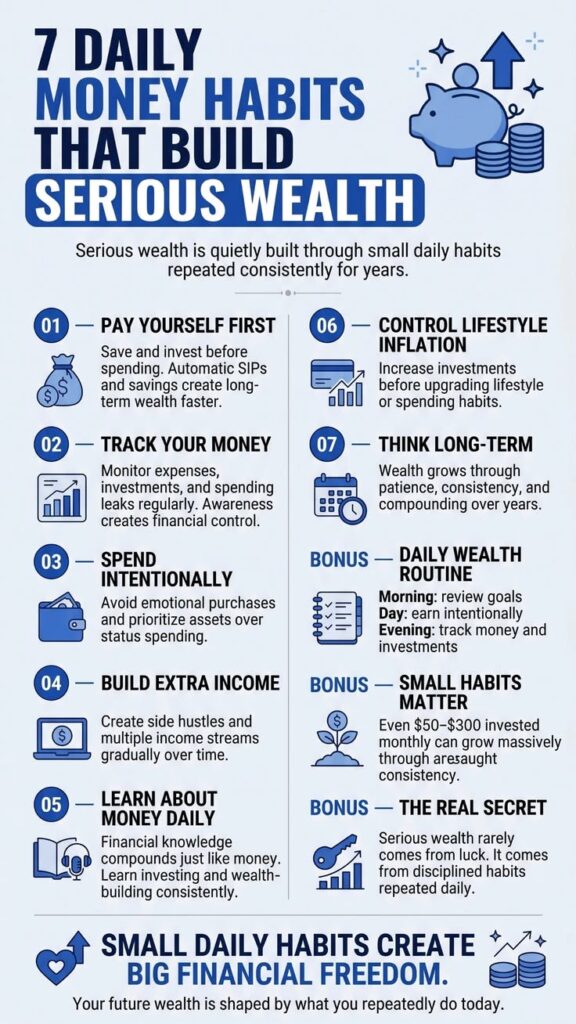
Here are seven financial habits that can help you build wealth over time.
1. Spend Less Than You Earn
One of the most important financial habits is learning to live within your means. If you consistently spend more than you earn, you may accumulate debt and struggle to save, regardless of how much money you make.
Start by understanding your monthly income and expenses. Identify your essential costs, including food, housing, transportation, and utilities. Then review your non-essential spending to determine where you can make reasonable adjustments.
For example, if you earn ₦100,000 monthly, spending the entire amount leaves you with nothing to save or invest. Reducing unnecessary expenses could allow you to set aside a portion of your income for future goals.
Living within your means does not mean avoiding everything enjoyable. It means making sure your spending reflects your financial priorities.
As your income increases, avoid automatically increasing your lifestyle expenses. Keeping some of the additional income for savings and investments can help you make progress toward building wealth.
2. Make Saving a Regular Habit
Saving money provides a foundation for financial stability. It helps you prepare for emergencies, cover planned expenses, and work toward important goals without depending entirely on borrowing.
Instead of saving only when money remains at the end of the month, include savings in your budget. Set aside an affordable amount whenever you receive income.
For example, saving ₦5,000 monthly would amount to ₦60,000 over one year if you make every contribution and do not withdraw the money.
If your income is small, begin with a lower amount and increase it when your circumstances improve. The goal is to develop a habit you can maintain consistently.
It is also helpful to give your savings a purpose. You might save for an emergency fund, education, rent, business equipment, or another important goal.
Over time, regular saving can give you more financial flexibility and reduce your dependence on debt.
3. Create and Follow a Budget
A budget helps you decide how to use your money before you spend it. Without a budget, it can be difficult to understand where your income goes or why you keep running out of money.
Start by listing your monthly income and expenses. Allocate money to essential needs first, then plan for savings, debt repayments, and personal spending.
Your budget should reflect your actual circumstances. You do not need to follow a particular percentage rule if your living costs make it unrealistic.
For example, if you discover that you spend too much on eating out or impulse purchases, you can set a reasonable limit for those expenses and direct the difference toward savings.
Track your spending throughout the month and review your budget regularly. If an expense is consistently higher than expected, adjust your plan rather than ignoring the problem.
A realistic budget gives your money direction and helps you make decisions that support your long-term goals.
4. Build an Emergency Fund
An emergency fund is money reserved for unexpected expenses, such as medical bills, urgent repairs, or a sudden loss of income.
Without emergency savings, you may be forced to borrow money or sell investments when an unexpected problem occurs. This can disrupt your financial plans and make it harder to build wealth.
Start with a small, achievable target. Once you have some savings, gradually work toward an amount that can cover three to six months of essential living expenses, depending on your circumstances.
For example, if your essential expenses are ₦50,000 monthly, a three-month emergency fund would be ₦150,000.
Keep this money somewhere reasonably secure and accessible when needed. Avoid using it for planned shopping, entertainment, or other non-emergency expenses.
Building an emergency fund may take time, especially on a limited income, but even a small reserve can provide valuable protection.
5. Avoid Unnecessary Debt
Debt can make it difficult to build wealth when repayments and interest consume money that could otherwise support your financial goals.
Borrowing is not always harmful. Certain loans may help finance education, productive business activities, or other worthwhile goals. However, borrowing for unnecessary purchases or taking expensive loans without a clear repayment plan can create serious financial pressure.
Before borrowing, understand the interest rate, additional fees, repayment schedule, and total amount you will owe.
If you already have debt, list your balances, interest rates, and payment deadlines. Continue meeting required payments where possible, and consider directing extra money toward high-interest debt to reduce its overall cost.
Avoid taking new loans simply to maintain a lifestyle you cannot afford.
Reducing expensive debt can free up more of your income for savings, investments, and other important financial priorities.
6. Invest for the Long Term
Saving helps you preserve money, while investing offers opportunities to grow it over time. Developing the habit of learning about and investing in suitable assets can support long-term wealth building.
Depending on your goals and circumstances, investment options may include stocks, bonds, mutual funds, exchange-traded funds, and other regulated financial products.
Before investing, understand how the product works, the fees involved, the potential returns, and the possibility of losing money. Avoid investing money you need for immediate expenses or emergencies.
You do not necessarily need a large amount to begin. Some products allow relatively small contributions, although minimum requirements and costs vary.
Regular contributions and patience can help you build your portfolio over time. However, investment returns are not guaranteed, and diversification cannot eliminate every risk.
The important habit is to make informed decisions instead of chasing quick profits or investing simply because other people recommend an opportunity.
7. Keep Learning and Look for Ways to Increase Your Income
Building wealth becomes more difficult when your income cannot comfortably cover your essential expenses. Although budgeting and saving are important, increasing your earning potential can also make a significant difference.
Consider developing valuable skills, improving your qualifications, exploring better employment opportunities, or offering services based on your abilities.
You might also start a small business or pursue suitable freelance work, provided the opportunity fits your resources and responsibilities.
For example, learning a marketable digital skill could help you qualify for additional work or offer services to more customers. However, choose opportunities carefully and avoid schemes promising guaranteed income or effortless wealth.
Financial education is equally important. Learn about budgeting, debt management, saving, investing, and common financial scams. Better knowledge can help you make more informed decisions as your financial situation changes.
As your income grows, consider directing part of the increase toward savings and investments instead of allowing every extra naira to become additional spending.
Conclusion
Building wealth is usually a gradual process that requires patience, discipline, and consistent financial decisions. Spending less than you earn, saving regularly, following a budget, building an emergency fund, avoiding unnecessary debt, investing wisely, and increasing your earning potential can help you create a stronger financial foundation.
You do not need to adopt all seven habits at once. Start with one or two that address your biggest financial challenges, then build on your progress.
Remember that everyone’s financial situation is different. Your income, responsibilities, and opportunities will influence how quickly you can reach your goals.
The most important thing is to develop habits that you can maintain over time. Small, consistent improvements can help you become more financially secure and move closer to the future you want.