Introduction
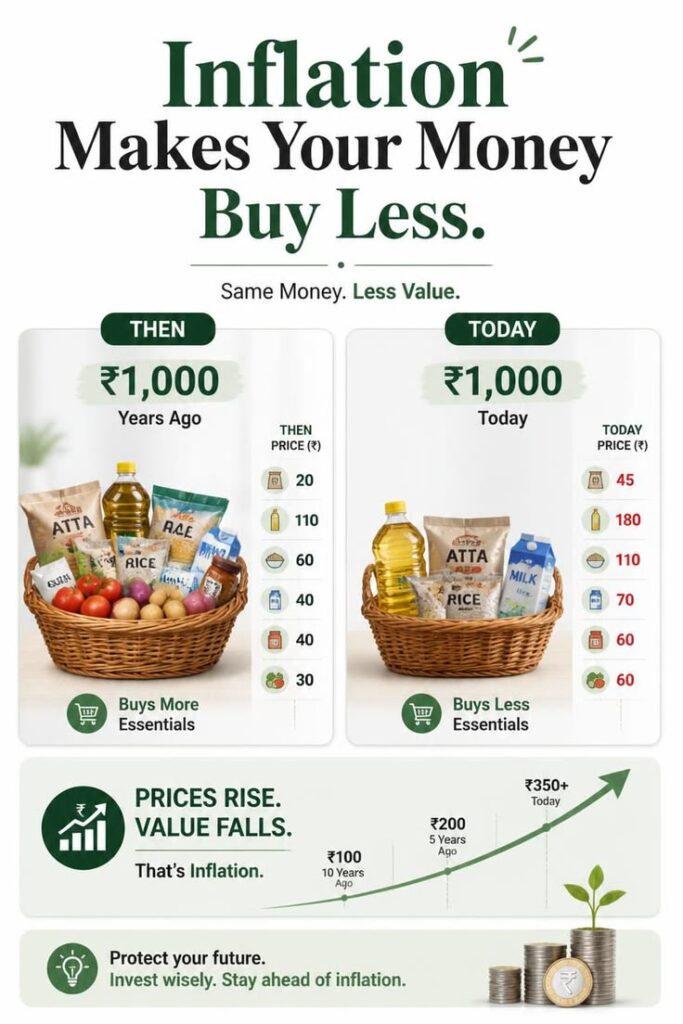
Inflation is one of the most important concepts in economics because it affects the daily lives of individuals, families, businesses, and governments. It refers to a general increase in the prices of goods and services over time. When inflation occurs, the purchasing power of money decreases, meaning that the same amount of money buys fewer goods and services than it did before.
For example, imagine that ₦5,000 was enough to buy rice, bread, eggs, and other basic food items a few years ago. Today, that same ₦5,000 may not be enough to purchase all those items. This happens because prices have increased, reducing the value of the money in terms of what it can buy.
Inflation does not necessarily mean that the amount of money you have has reduced. Instead, it means that the money may no longer purchase as much as it once did. Understanding inflation is important because it helps people make better decisions about saving, spending, investing, and managing their finances.
Meaning of Inflation
Inflation is the sustained increase in the general price level of goods and services in an economy over a period of time. It affects products such as food, clothing, fuel, transportation, housing, healthcare, and education.
Inflation is usually measured as a percentage change in prices over a particular period, often monthly or annually. For example, if the inflation rate is 10% over a year, this means that the general price level is approximately 10% higher than it was a year earlier.
However, not every product increases in price by the same percentage. Some products may become much more expensive, while others may experience smaller increases or even price decreases.
It is also important to understand that inflation is different from the price increase of a single product. If only the price of tomatoes rises because of a poor harvest, that alone does not necessarily indicate general inflation. Inflation occurs when prices across the economy rise more broadly.
Why Does Your Money Buy Less Over Time?
There are several reasons why money loses purchasing power during inflation.
1. Rising Prices of Goods and Services
The most direct effect of inflation is that the prices of everyday necessities increase. Food, transportation, electricity, rent, and other expenses may become more expensive.
For example, suppose a bag of rice costs ₦50,000 today. If its price increases to ₦60,000, you will need an additional ₦10,000 to purchase the same bag.
If your income remains unchanged while prices continue to rise, you will be able to afford fewer goods and services. This reduces your standard of living unless you can adjust your spending or increase your income.
2. Increased Production Costs
Businesses often experience higher costs for raw materials, electricity, transportation, rent, and workers’ wages. When these costs increase, businesses may raise the prices of their products and services to remain profitable.
For instance, if a baker pays more for flour, sugar, electricity, and transportation, the cost of producing bread will increase. The baker may respond by increasing the price of bread.
When many businesses experience similar cost increases, the overall price level in the economy may rise.
3. Excess Demand for Goods and Services
Inflation can also occur when demand for goods and services grows faster than the economy’s ability to supply them.
When many people want to purchase a product but there is not enough of it available, sellers may increase its price.
For example, if demand for houses increases significantly while the number of available houses remains limited, rental and property prices may rise.
This type of inflation is often called demand-pull inflation.
4. Growth in the Money Supply
When the amount of money circulating in an economy grows faster than the production of goods and services, it can contribute to inflation under certain economic conditions.
If people have more money to spend but the quantity of available products does not increase sufficiently, demand may rise faster than supply, putting upward pressure on prices.
However, an increase in the money supply does not automatically cause inflation. Its effect depends on factors such as production, demand, credit conditions, and the wider state of the economy.
5. Exchange Rate Changes
Countries that import many goods and raw materials can experience higher prices when their currency loses value against foreign currencies.
For example, if Nigerian businesses need to import machinery, medicines, fuel-related products, or manufacturing materials, a weaker naira can make those imports more expensive.
Businesses may then pass some of these additional costs on to consumers. This can increase the prices of imported products and locally produced goods that depend on imported materials.
The Effects of Inflation
Inflation affects different people in different ways.
First, it reduces purchasing power. People need more money to buy the same quantity of goods and services.
Second, it affects savings. If money is kept in an account earning little or no interest while prices rise, its purchasing power may decline over time.
Third, it increases the cost of living. Families may spend more on food, rent, transportation, healthcare, and education, leaving less money for other needs.
Fourth, it affects businesses. Companies may face higher operating costs, uncertain demand, and difficulties planning their budgets.
Finally, it can increase financial pressure on people with fixed incomes. Retirees and workers whose earnings do not rise as quickly as prices may find it harder to maintain their previous standard of living.
Moderate and predictable inflation can occur in a growing economy. However, high or unpredictable inflation makes budgeting, saving, and long-term planning more difficult.
How Can You Protect Your Money Against Inflation?
Although individuals cannot control the overall inflation rate, they can take steps to manage its effects.
1. Prepare a budget. Track your income and expenses so you can identify where your money goes and adjust spending when necessary.
2. Build an emergency fund. Set aside money for unexpected expenses, while considering an account that provides reasonable access and returns.
3. Avoid keeping all long-term savings in cash. Depending on your circumstances and risk tolerance, consider investments that may help preserve purchasing power over time.
4. Invest carefully. Different assets, such as diversified investment funds, bonds, or property, may respond differently to inflation. Research their risks, costs, liquidity, and potential returns before investing.
5. Develop your skills and income sources. Improving your qualifications, learning valuable skills, or developing a sustainable side business may help you increase your income over time.
6. Compare prices and plan purchases. Shopping around, reducing waste, and prioritising essential expenses can help you manage rising living costs.
No strategy guarantees that your money will maintain its purchasing power. The right approach depends on your financial goals, income, debts, time horizon, and ability to tolerate risk.
Conclusion
Inflation explains why money can buy less over time, even when the amount you hold remains the same. As the general prices of goods and services increase, the purchasing power of money decreases. This can result from rising production costs, strong demand, exchange rate changes, and other economic factors.
Inflation affects savings, wages, businesses, household budgets, and the overall cost of living. For this reason, understanding inflation is essential for making informed financial decisions.
The key lesson is that having the same amount of money does not mean having the same purchasing power. Managing expenses, building financial resilience, increasing income where possible, and considering suitable investments can help people respond to inflation and work toward long-term financial security.