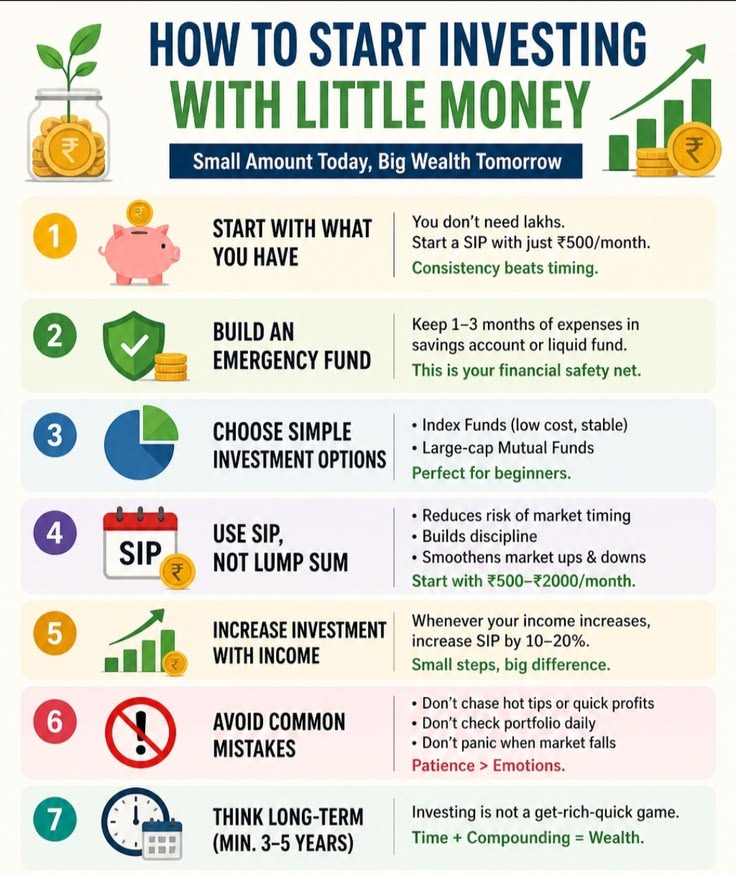
Many people believe investing is only for the wealthy, but that is not true. You do not need millions of naira to begin learning how to invest. With a small amount of money, a clear plan, and patience, you can take your first steps toward building wealth over time.
Investing involves putting money into assets with the expectation of earning returns or increasing their value. Although investing can help you work toward long-term financial goals, it also involves risks, and you may lose some or all of the money you invest. Therefore, beginners should understand the basics before committing their money.
Whether you earn a salary, run a small business, or receive irregular income, here are practical steps to help you start investing with little money.
1. Understand Your Financial Situation First
Before investing, understand how much money you earn, how much you spend, and how much you can afford to set aside.
Start by listing your income and essential expenses, including food, transportation, rent, utilities, and healthcare. Identify any outstanding debts and determine whether your income leaves room for regular savings.
If you struggle to pay for necessities or depend on expensive loans to meet everyday expenses, focus on stabilizing your finances first. Investing money you need for immediate bills can put you under unnecessary pressure.
You should also consider building an emergency fund. Even a small reserve can help you handle unexpected expenses without having to sell investments at an inconvenient time.
Once your basic financial needs are reasonably covered, you can begin exploring investment opportunities with money you can afford to leave invested.
2. Start With a Small, Affordable Amount
You do not need to wait until you have a large amount of money before learning about investing. Many financial products have relatively low minimum investment requirements, although the available options and costs vary.
For example, you might decide to invest ₦1,000, ₦5,000, or ₦10,000 monthly, depending on your income and the products available to you.
The most important thing is to choose an amount that does not interfere with essential expenses or emergency savings.
Starting small also allows you to learn how an investment works without immediately committing a large portion of your money. As your income grows and your financial situation improves, you may gradually increase your contributions.
Remember that small investments can grow over time, but returns are not guaranteed, and fees can have a greater effect on very small balances.
3. Learn About Different Investment Options
Before investing, understand the main types of assets available to beginners.
Stocks: Buying shares means owning a small part of a company. Shares can increase in value and may pay dividends, but their prices can also fall significantly.
Bonds: Bonds are debt instruments through which an issuer borrows money from investors and promises repayment under specified terms. Government and corporate bonds have different risks, and returns depend on factors such as interest rates and the issuer’s ability to pay.
Mutual funds: These pool money from multiple investors to purchase a collection of assets. Depending on the fund, investments may include stocks, bonds, or money-market instruments. Fees, risks, and minimum contributions vary.
Money-market funds: These generally invest in short-term debt and money-market instruments. They may offer an option for investors seeking relatively lower volatility than stocks, but they are not risk-free and are not the same as bank deposits.
Exchange-traded funds (ETFs): These are investment funds traded on an exchange. Some track a market index and provide exposure to many investments through a single product.
Each option serves different purposes. Research the investment, understand the potential losses, and choose according to your goals and risk tolerance.
4. Set Clear Investment Goals
Investing becomes easier when you know what you are trying to achieve. Your goal helps determine which investments may be appropriate and how long you can leave your money invested.
For example, you might invest to prepare for retirement, fund further education, build long-term wealth, or work toward buying property.
Short-term goals generally require greater attention to capital preservation and access to your money. Long-term goals may allow you to consider investments with greater growth potential, provided you understand the risks.
Write down your goal, the amount you hope to accumulate, and your expected time frame. Review your plan as your circumstances change.
Avoid choosing an investment simply because someone recommends it or claims that it produces high returns. The investment should fit your own financial objectives.
5. Invest Consistently Instead of Waiting for a Large Amount
One useful habit is making regular contributions rather than waiting until you have a large sum available.
For example, if you invest ₦5,000 monthly, your contributions would total ₦60,000 after twelve months, excluding investment gains or losses.
Regular contributions can help you develop discipline and gradually build your investment portfolio. They also reduce the pressure to predict the perfect time to invest.
However, investing regularly does not eliminate market risk. The value of your investments may fall, and you should avoid continuing contributions blindly if your financial circumstances change.
Choose a schedule that fits your income. If your earnings are irregular, you could contribute when you receive payments rather than committing to a fixed amount you cannot reliably afford.
6. Understand Risk and Diversification
Every investment carries some form of risk. Stocks can decline in value, bond issuers can default, and some investment products may impose withdrawal restrictions.
Diversification means spreading your money across different investments instead of depending entirely on one company, asset, or sector. It can reduce the impact of a poor result from an individual investment, although it cannot eliminate all risk.
For example, a diversified fund may hold shares in several companies rather than relying on the performance of a single company.
As a beginner, avoid investing all your available money in one opportunity simply because it appears popular. Learn how different investments behave and choose a level of risk you can tolerate.
Never invest money you cannot afford to lose in a high-risk asset, and be particularly cautious when borrowing money to invest.
7. Avoid Scams and Unrealistic Promises
People who are new to investing can be vulnerable to schemes promising quick wealth. Be cautious of anyone guaranteeing unusually high returns, pressuring you to invest immediately, or requiring you to recruit others to earn money.
Before sending money to an investment provider, research the organization and verify its registration with the relevant regulator.
If you are investing in Nigeria, consult official information from the Securities and Exchange Commission Nigeria and verify the regulatory status of the provider and product where applicable.
Understand how the investment generates returns, what fees apply, how withdrawals work, and what could cause you to lose money.
If you cannot explain how an investment works after reviewing its terms, take more time to learn before committing your money.
8. Review Your Progress and Keep Learning
Investing is a long-term learning process. Review your portfolio periodically to check whether it still matches your financial goals and risk tolerance.
Avoid checking prices constantly or making emotional decisions whenever markets rise or fall. Frequent trading can also increase costs and encourage poor decisions.
Continue learning about investment fees, inflation, diversification, and the relationship between risk and potential returns.
As your income increases, consider increasing your contributions where appropriate. If your expenses rise or you experience a financial emergency, it may be necessary to reduce or pause contributions temporarily.
Your investment plan should support your life, not make it more financially stressful.
Conclusion
Starting to invest with little money is possible when you understand your finances, choose affordable contributions, learn about available investments, and remain aware of the risks.
You do not need to rush or invest large amounts immediately. Begin by building a financial foundation, setting clear goals, and researching suitable investment products. Then contribute consistently as your circumstances allow.
The most important step is to start learning before making major financial commitments. With patience, discipline, and informed decisions, you can gradually build your investment knowledge and work toward your long-term financial goals.