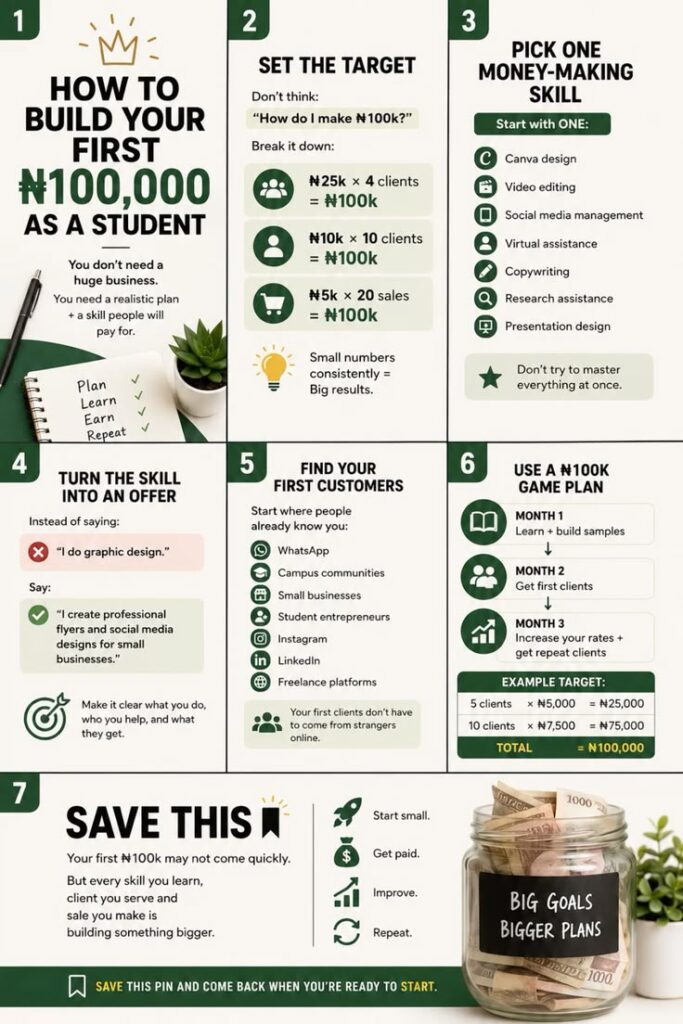
Saving your first ₦100,000 can feel like a difficult goal, especially when your income is small and you have several expenses to manage. Between food, transportation, bills, rent, and family responsibilities, it may seem as though there is never enough money left to save. However, reaching your first savings milestone is possible with a realistic plan, consistent effort, and better money habits.
Your first ₦100,000 is more than just money in your account. It represents discipline, patience, and the ability to work toward a financial goal. It can also provide a starting point for building an emergency fund and preparing for future expenses. Here are practical steps to help you reach your goal.
1. Set a Clear Savings Goal
The first step is deciding exactly how much you want to save and when you want to achieve it. Instead of simply saying, “I want to save money,” set a specific target of ₦100,000.
Having a clear goal makes it easier to measure your progress and stay motivated. Decide on a realistic deadline based on your income and responsibilities.
For example, you could aim to save ₦100,000 within ten months by putting aside ₦10,000 monthly. If you save ₦5,000 monthly, it would take twenty months. If you can save ₦20,000 monthly, you could reach the target in five months.
Choose a timeline you can maintain without neglecting essential expenses. Your goal should motivate you, not force you into unnecessary debt or financial hardship.
2. Understand Your Income and Expenses
Before you begin saving, you need to know how much money you receive and where it goes. Many people struggle to save because they spend without tracking their expenses.
Write down your monthly income, including salary, business earnings, allowances, or money from side jobs. Then list your essential expenses, such as food, transportation, rent, electricity, and other necessary bills.
Next, identify non-essential expenses, including impulse purchases, frequent outings, and subscriptions you rarely use.
For example, if you earn ₦80,000 monthly and spend ₦72,000, you have only ₦8,000 remaining before accounting for unexpected expenses. Understanding this situation helps you decide whether to reduce certain expenses, increase your income, or adjust your savings timeline.
A clear picture of your finances allows you to create a savings plan based on reality rather than guesswork.
3. Create a Simple Monthly Budget
A budget helps you give every part of your income a purpose. It ensures that essential expenses are covered while making room for savings.
Suppose you earn ₦100,000 monthly. You might allocate ₦55,000 to essential needs, ₦15,000 to transportation and personal expenses, ₦10,000 to family responsibilities, and ₦10,000 to savings, leaving ₦10,000 for other planned expenses or a financial buffer.
These figures are examples, not fixed rules. Your actual budget should reflect your living costs and responsibilities.
If you cannot save ₦10,000 monthly, start with ₦2,000 or ₦5,000. You can gradually increase your contributions when your financial situation improves.
The goal is to develop a budget that works consistently rather than create a perfect plan that becomes impossible to follow.
4. Save Before You Spend
One effective savings habit is to set aside money as soon as you receive your income. Waiting until the end of the month can make saving difficult because unexpected purchases may consume the money you intended to save.
For example, if you receive ₦50,000, you could immediately transfer an affordable amount into a separate savings account before spending on non-essential items.
This approach helps you treat saving as a financial priority rather than something you do only when money remains.
If your income is irregular, save a percentage of each payment or contribute whenever you receive money. You do not need to make identical contributions every time, provided your plan remains realistic.
5. Reduce Unnecessary Spending
You do not necessarily need to stop enjoying life to save your first ₦100,000. Instead, identify expenses you can reduce without affecting your health, safety, or essential needs.
For example, preparing meals at home more often, comparing prices before shopping, avoiding impulse purchases, and cancelling unused subscriptions may help you free up money.
Small savings can make a difference. If you reduce unnecessary spending by ₦500 daily, you could free up approximately ₦15,000 over thirty days, provided the reduction is realistic and maintained.
Before buying something, ask yourself whether you need it immediately, whether it fits your budget, and whether delaying the purchase would help you reach your savings goal sooner.
The purpose is to spend intentionally, not to eliminate every enjoyable activity from your life.
6. Consider Ways to Increase Your Income
Sometimes, reducing expenses is not enough. If most of your income goes toward essential needs, you may need additional income to reach your savings goal comfortably.
Consider offering services based on your skills, taking suitable freelance work, tutoring, selling products, or starting a small business that fits your available resources.
For example, if you already save ₦5,000 monthly and earn an additional ₦5,000 from legitimate side work, you could potentially double your monthly savings to ₦10,000.
Be careful with opportunities that promise quick profits or guaranteed returns. Avoid borrowing money for risky schemes simply because you want to reach your goal faster.
Choose income opportunities that fit your circumstances and do not interfere with your primary responsibilities.
7. Keep Your Savings Separate and Secure
Keeping your savings separate from your everyday spending money can help you avoid using them unnecessarily.
Consider using a suitable savings account or another reputable, reasonably secure savings product. Check the fees, withdrawal restrictions, and applicable protections before choosing where to keep your money.
Your first ₦100,000 may eventually become part of your emergency fund, so accessibility and safety are important considerations.
Avoid putting money needed for short-term goals into risky investments that could lose value or prevent you from accessing your funds when necessary.
You should also monitor your balance regularly to ensure you are making progress toward your target.
8. Track Your Progress and Stay Consistent
Saving ₦100,000 can feel overwhelming if you focus only on the final amount. Breaking the goal into smaller milestones makes it easier to manage.
You could set the following milestones:
- First ₦10,000: Establish your savings habit.
- ₦25,000: Review your budget and identify further improvements.
- ₦50,000: Celebrate your progress and continue your plan.
- ₦75,000: Stay consistent and avoid unnecessary withdrawals.
- ₦100,000: Reach your first major savings milestone.
Record each contribution in a notebook, spreadsheet, or savings tracker. Seeing your progress can help you stay motivated.
If an emergency forces you to withdraw some money, do not assume you have failed. Handle the emergency, review your plan, and resume saving when you can.
9. What Should You Do After Saving ₦100,000?
Once you reach your first ₦100,000, decide what purpose the money should serve. If you do not have emergency savings, consider keeping some or all of it available for unexpected expenses.
Your next goal might be to save enough to cover one month of essential living expenses, gradually building toward a larger emergency fund.
If you already have adequate emergency savings, you could work toward another financial goal, such as education, business equipment, or long-term investing. Before investing, understand the risks and avoid committing money you need for immediate expenses.
Reaching ₦100,000 is not the end of your financial journey. It is a foundation on which you can build stronger habits.
Conclusion
Saving your first ₦100,000 requires a clear goal, a realistic budget, consistent contributions, and a willingness to make thoughtful spending decisions. You may also need to explore additional income opportunities if your current earnings leave little room for savings.
Start with whatever amount you can reasonably afford, keep your savings secure, and track your progress. Do not compare your journey with someone else’s because everyone has different income levels and responsibilities.
Remember, you do not need to become wealthy before you start saving. By building good financial habits today, you can gradually improve your financial security and move closer to your future goals.