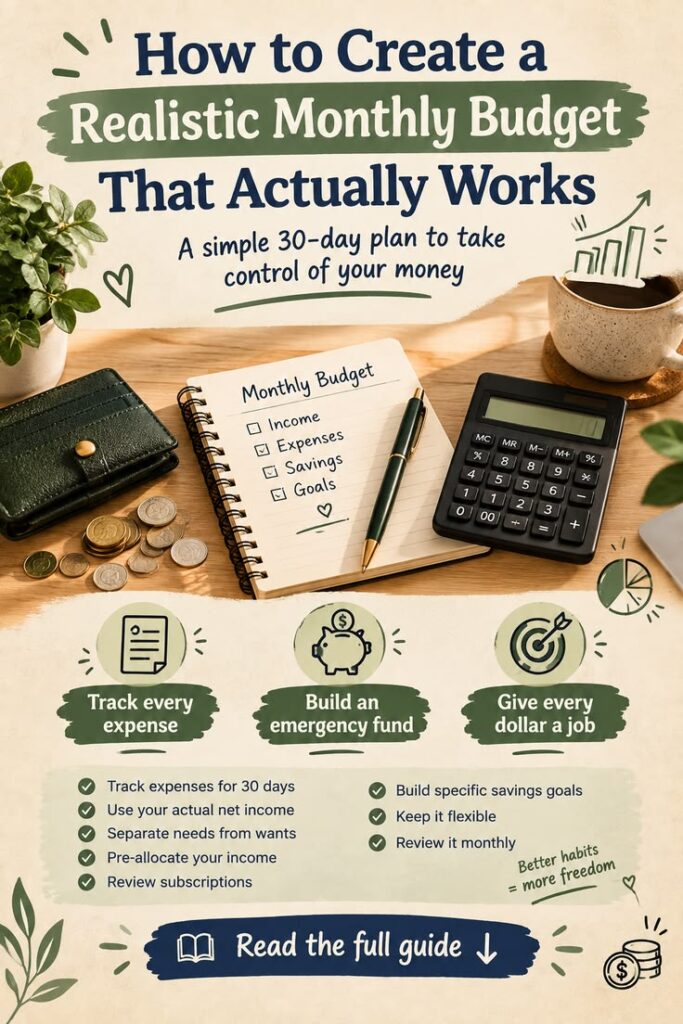
Managing money can be difficult when you have bills to pay, daily expenses to cover, and financial goals to achieve. Without a clear plan, it is easy to spend more than you intended and struggle before the end of the month. This is why creating a monthly budget is an important step toward financial stability. A budget helps you understand where your money goes, control unnecessary spending, and make better financial decisions. The good news is that you do not need to earn a lot of money or be an expert in finance to create a budget that works.
1. Calculate Your Monthly Income
The first step in creating a monthly budget is determining how much money you have available. Your income may come from a salary, business, freelance work, allowances, or other sources.
If you earn a fixed salary, use the amount you receive after taxes and other deductions. If your income changes from month to month, calculate a reasonable estimate based on your previous earnings. It is safer to plan around a conservative amount than to depend on income you are not certain to receive.
For example, if you receive ₦100,000 monthly, that amount becomes the starting point for your budget. Knowing your available income helps you decide how much to allocate to expenses, savings, and other financial responsibilities.
2. List All Your Expenses
The next step is to identify everything you spend money on during the month. Many budgets fail because people forget small or irregular expenses that eventually add up.
Start by listing essential expenses such as rent, food, transportation, electricity, healthcare, and school fees. Include regular payments such as internet subscriptions, loan repayments, and insurance where applicable.
Then list personal expenses, including entertainment, eating out, clothing, and other non-essential purchases. Remember to include occasional costs, such as vehicle repairs, annual bills, gifts, and home maintenance. You can estimate these expenses monthly so you are better prepared when they occur.
Review your bank statements, receipts, and transaction history to get a more accurate picture of your spending. The more realistic your expense list is, the more useful your budget will become.
3. Choose a Budgeting Method
A budgeting method provides a structure for dividing your income. One popular option is the 50/30/20 rule. It suggests allocating 50% of income to needs, 30% to wants, and 20% to savings and debt repayment.
For someone earning ₦100,000 monthly, this could mean ₦50,000 for needs, ₦30,000 for wants, and ₦20,000 for savings and debt repayment.
However, this method may not work for everyone, especially when housing and food consume most of a person’s income. You can adjust the percentages to suit your circumstances.
Another useful option is zero-based budgeting, where every unit of income is assigned a purpose until your planned income minus your planned expenses equals zero. This does not mean spending everything; savings and emergency funds are also budget categories.
Choose a method that is simple enough to maintain consistently.
4. Prioritize Your Essential Needs
When planning your budget, cover essential expenses before allocating money to non-essential activities. Your basic needs should receive priority because they support your health, safety, and daily responsibilities.
These needs usually include housing, food, transportation, utilities, and healthcare. If you have debt, account for required repayments as well.
Once you have covered these priorities, determine how much remains for personal spending and savings. If your essential expenses consume most of your income, reduce flexible spending where possible and consider ways to increase your earnings.
A practical budget should reflect your real circumstances rather than forcing you to follow percentages that do not fit your life.
5. Make Saving Part of Your Budget
One common budgeting mistake is saving only whatever remains at the end of the month. Unexpected expenses and unplanned purchases can leave little or nothing to save.
Instead, include savings as a planned category. Decide on an affordable amount and set it aside when you receive your income. Even a small contribution can help you build the habit.
You might save toward an emergency fund, future education, rent, a business, or another important goal. Keeping your savings separate from everyday spending money may make it easier to avoid using them unnecessarily.
If you have no emergency savings, consider building a small reserve first. Over time, aim to accumulate enough to cover several months of essential expenses, depending on your circumstances.
6. Track Your Spending Throughout the Month
Creating a budget is only the beginning. To make it work, you must monitor your spending and compare it with your plan.
You can track expenses using a notebook, spreadsheet, budgeting application, or your phone’s notes. Record purchases as they happen so you do not forget them.
For example, if you allocate ₦10,000 to entertainment for the month and spend ₦7,000 in the first week, you know that you need to be careful with the remaining ₦3,000.
Checking your spending regularly allows you to identify problems early and adjust before your money runs out. It also helps you understand your habits and discover areas where you can save.
7. Prepare for Unexpected Expenses
Unexpected expenses can disrupt even a carefully prepared budget. A medical bill, urgent repair, or sudden change in income may require money you did not plan to spend.
To prepare, create an emergency fund and include a small buffer in your monthly budget when possible. You should also plan for predictable but irregular expenses by setting aside a little money each month.
For example, if you expect to pay ₦24,000 for an annual expense, saving ₦2,000 monthly can help you prepare for it without disrupting your regular budget.
Planning for these expenses reduces the likelihood of relying on expensive loans when problems arise.
8. Avoid Common Budgeting Mistakes
Several habits can make a budget difficult to maintain. One is setting unrealistic limits that leave too little money for essential needs or reasonable enjoyment. Another is forgetting irregular expenses or assuming that every month will be the same.
Some people also abandon their budgets after making a mistake. However, one unplanned purchase does not mean the entire budget has failed.
When you overspend in one category, review your remaining money and make reasonable adjustments. Avoid cutting essential needs or borrowing unnecessarily to compensate.
A successful budget should be flexible enough to accommodate changes while keeping your main financial priorities in focus.
9. Review and Improve Your Budget Monthly
At the end of each month, compare your actual spending with your original plan. Identify the categories where you spent more or less than expected and consider why the differences occurred.
If transportation costs were higher than planned, increase that category in the next budget. If you spent less on entertainment, you may be able to direct the difference toward savings or another goal.
Your financial circumstances can change, so your budget should change with them. Reviewing it every month helps you make improvements and maintain realistic expectations.
Conclusion
Creating a monthly budget that actually works requires understanding your income, listing your expenses, choosing a suitable budgeting method, prioritizing essential needs, and making saving part of your plan. Tracking spending and reviewing your progress will help you identify problems and make adjustments when necessary.
Remember that budgeting is not about restricting every purchase or making your life uncomfortable. It is about giving your money a clear purpose and ensuring that your spending supports your priorities.
Start with a simple plan, remain consistent, and improve it as you learn more about your financial habits. Over time, a realistic monthly budget can help you reduce financial stress, prepare for emergencies, and work toward your long-term goals.