
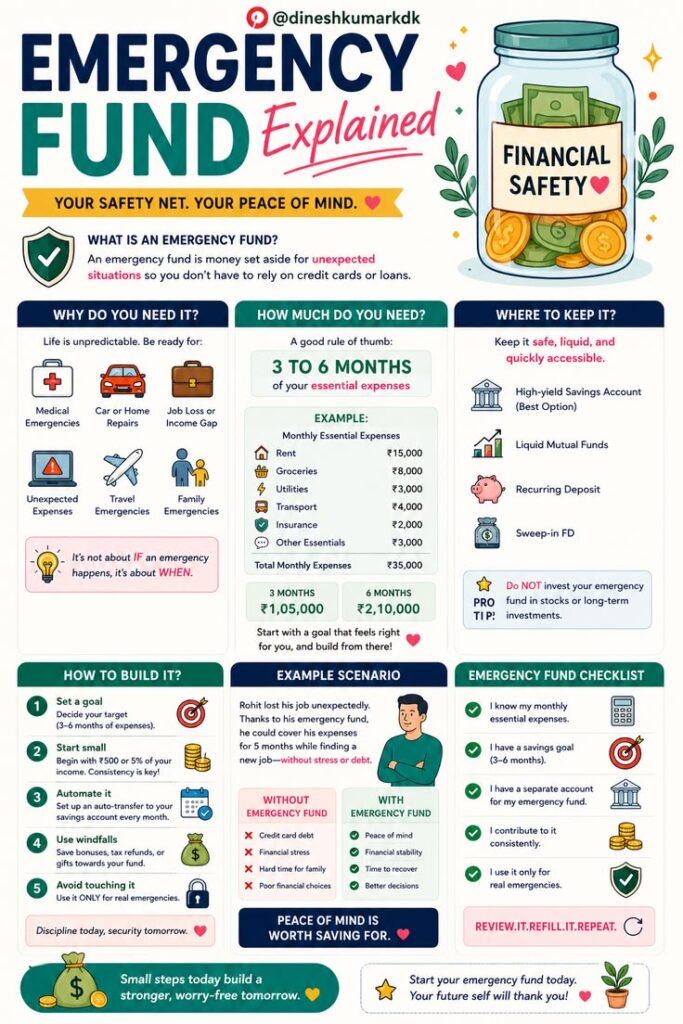
Life is unpredictable. You might lose your job, face an unexpected medical bill, need urgent car repairs, or experience a delay in receiving your salary. When these situations happen, having money set aside can make the difference between managing the problem comfortably and falling into financial stress.
This is where an emergency fund becomes important.
An emergency fund is money you save specifically for unexpected expenses or financial difficulties. It acts as a safety net, helping you cover essential costs without relying on loans, credit cards, or money borrowed from friends and family.
Whether you are a student, a young professional, a business owner, or someone supporting a family, building an emergency fund is an important step toward financial stability.
In this guide, you will learn what an emergency fund is, why it matters, how much you should save, and how to build one even when your income is limited.
1. What Is an Emergency Fund?
An emergency fund is a reserve of money set aside to cover unexpected expenses or periods when your regular income is interrupted.
Unlike money saved for a holiday, a new phone, or a planned purchase, emergency savings are intended for situations that require immediate financial attention.
Examples of emergencies include:
- Losing your job or experiencing a significant reduction in income.
- Unexpected medical expenses.
- Urgent repairs to your home or vehicle.
- Essential travel because of a family emergency.
- Emergency household expenses, such as replacing a critical appliance.
- Temporary business or income disruptions that affect your ability to cover basic living costs.
The purpose of an emergency fund is to provide financial protection when life does not go according to plan.
It does not need to be large when you first start saving. Even a modest amount can help you manage a small emergency without borrowing money.
2. Why Is an Emergency Fund Important?
Building an emergency fund offers several benefits that can improve your financial security.
It Helps You Avoid Unnecessary Debt
Without emergency savings, an unexpected expense may force you to take out a loan or use a credit card.
If the borrowing comes with high interest rates and fees, a single emergency can become a financial burden that lasts for months.
An emergency fund allows you to pay for unexpected expenses using money you already have, reducing your dependence on expensive borrowing.
It Provides Peace of Mind
Financial uncertainty can create anxiety, especially when you are unsure how you would handle an unexpected bill.
Knowing that you have money available for emergencies can make difficult situations feel more manageable.
You may not be able to prevent every financial problem, but having a financial cushion gives you more options when problems arise.
It Protects Your Long-Term Goals
Imagine saving money for education, a home deposit, or a business venture when your car suddenly needs an expensive repair.
Without an emergency fund, you might have to withdraw money from those savings or abandon your goal temporarily.
Emergency savings help protect money intended for other purposes, allowing you to continue working toward your long-term financial objectives.
It Gives You More Flexibility
If you lose your job, experience delayed payments, or need time to find a better employment opportunity, emergency savings can help cover essential expenses while you adjust.
This flexibility can prevent you from making rushed financial decisions simply because you need money immediately.
3. How Much Should You Save in an Emergency Fund?
A common guideline is to save enough to cover three to six months of essential living expenses.
However, the right amount depends on your income, employment stability, family responsibilities, health needs, and access to other reliable financial support.
If your income is predictable and your expenses are relatively low, a smaller emergency fund may be a reasonable starting point.
If you are self-employed, support dependents, work in an unstable industry, or have irregular income, you may benefit from a larger reserve.
The important thing is to choose a target that reflects your actual financial situation.
Start With a Small Emergency Fund
If you have no savings, do not let the three-to-six-month guideline discourage you.
Your first goal could be an amount sufficient to cover one common unexpected expense, such as a repair, urgent medical cost, or essential household bill.
Once you reach that target, gradually increase your savings.
Build Toward One Month of Essential Expenses
Your next milestone can be enough money to cover one month of necessary living costs.
This may include housing, food, transportation, utilities, healthcare, and minimum required debt payments.
Having one month of expenses saved can provide meaningful protection against a temporary financial disruption.
Work Toward Three to Six Months
Once you have established a smaller reserve, work toward saving three to six months of essential expenses.
You do not need to reach this target immediately. Saving consistently over time is more important than trying to build the entire fund in a few weeks.
4. How to Calculate Your Emergency Fund Target
To calculate your target, first determine how much you need each month to cover essential expenses.
For example, imagine your monthly expenses are:
- Housing: ₦100,000
- Food and household necessities: ₦60,000
- Transportation: ₦25,000
- Utilities and communication: ₦15,000
- Healthcare and other essential costs: ₦20,000
Your total essential monthly expenses would be ₦220,000.
Using that amount, your emergency fund targets would be:
| Coverage period | Savings target |
|---|---|
| One month | ₦220,000 |
| Three months | ₦660,000 |
| Six months | ₦1,320,000 |
These figures are illustrative. Your actual target should reflect your own expenses and circumstances.
Notice that the calculation uses essential expenses rather than your entire salary. During an emergency, you may be able to pause nonessential spending, such as entertainment, dining out, or optional subscriptions.
If you have dependents or irregular income, you may want to include additional necessary expenses in your calculation.
5. Where Should You Keep Your Emergency Fund?
Your emergency fund should be accessible, relatively secure, and separate from money you use for everyday spending.
The most important consideration is that you can access the money when an emergency occurs without exposing it to unnecessary risk.
A Separate Savings Account
A suitable savings account can help you keep emergency money separate from your regular spending funds.
Look for an account with reasonable fees, convenient withdrawals, and appropriate protection under the deposit insurance rules in your country.
Separating the money can also reduce the temptation to spend it on nonessential purchases.
A Suitable Interest-Bearing Account
Depending on the financial products available where you live, you may be able to earn interest while keeping your emergency savings accessible.
Compare withdrawal restrictions, fees, interest conditions, and the safety of the institution before choosing an account.
Avoid placing money you may need immediately into products with substantial withdrawal penalties or long lock-in periods.
Avoid Risky Investments for Emergency Savings
An emergency fund should not depend on the stock market, cryptocurrency prices, or other volatile investments.
These assets can lose value precisely when you need your money.
The main purpose of an emergency fund is financial protection and accessibility, not maximizing investment returns.
6. How to Build an Emergency Fund on a Limited Income
Saving can be difficult when most of your income already goes toward essential expenses. However, there are practical ways to make progress without placing excessive pressure on your budget.
Start With an Affordable Amount
You do not need to save a large percentage of your income immediately.
Choose an amount that you can consistently set aside after accounting for essential expenses and urgent obligations.
For example, saving ₦5,000 each week would add up to ₦260,000 over 52 weeks, assuming you make every contribution and do not withdraw the money.
If that amount is too high, start smaller and increase it when your circumstances improve.
Automate Your Savings
If possible, schedule a transfer into your emergency savings account shortly after receiving your income.
Automation can help you maintain consistency without having to make the decision every time you get paid.
If your income varies, use a small baseline contribution and add more during stronger months.
Reduce One or Two Unnecessary Expenses
Review your spending to identify expenses you can reduce without affecting your basic needs.
You might cancel an unused subscription, plan meals more carefully, or reduce impulse purchases.
Direct the money you save toward your emergency fund instead of allowing it to disappear into other spending.
You do not need to eliminate every enjoyable activity. A sustainable savings habit is more useful than a restrictive budget you cannot maintain.
Save Part of Any Extra Income
If you receive a bonus, gift, commission, or payment from freelance work, consider directing part of it toward your emergency fund.
Additional income can help you reach your target faster without requiring a major change to your regular monthly budget.
Keep Track of Your Progress
Record your savings balance every month and compare it with your target.
If your goal is ₦300,000 and you have saved ₦75,000, you have already completed 25% of your target.
Recognizing small milestones can help you stay motivated.
7. When Should You Use Your Emergency Fund?
Your emergency fund should be reserved for genuine financial needs that are unexpected or urgent.
Before withdrawing money, ask yourself whether the expense is necessary, whether it is urgent, and whether it could reasonably have been planned for in advance.
For example, an unexpected medical expense may qualify as an emergency. A holiday, a new entertainment device, or a planned celebration would generally be better funded through a separate savings goal.
Some expenses are predictable even if they occur only once or twice a year. Rent renewals, school fees, insurance premiums, and annual subscriptions should ideally have their own savings plans.
If you use your emergency fund, do not feel guilty. That is what the money is for.
Once the immediate problem is resolved, gradually rebuild the amount you withdrew.
8. Common Emergency Fund Mistakes to Avoid
Several mistakes can reduce the effectiveness of your emergency savings.
Waiting until you earn more: You can start with a small amount and increase it over time.
Setting an unrealistic target: A target that is too large may discourage you from starting. Build your savings in manageable stages.
Investing the money in volatile assets: Emergency funds should prioritize stability and accessibility over high returns.
Using emergency savings for everyday shopping: Keep your emergency fund separate from money intended for entertainment and other nonessential purchases.
Forgetting to replenish withdrawals: After using the fund, make rebuilding it part of your next financial plan.
Ignoring inflation and rising expenses: Review your target periodically, especially when your living costs increase significantly.
Avoiding these mistakes can help ensure that your emergency fund remains useful when you need it most.
Conclusion
An emergency fund is one of the most important foundations of a healthy financial life. It helps you handle unexpected expenses, avoid unnecessary borrowing, protect your long-term goals, and feel more secure about your financial future.
A common target is three to six months of essential living expenses, but you do not need to achieve that amount immediately.
Start with a small, realistic goal. Save consistently, keep the money accessible, and increase your target as your financial situation improves.
Remember that an emergency fund is not about predicting every problem that might occur. It is about preparing yourself to handle unexpected situations without allowing them to derail your entire financial life.
The best time to start building an emergency fund is before you need one. Even a small amount saved today can give you more options and greater peace of mind tomorrow.