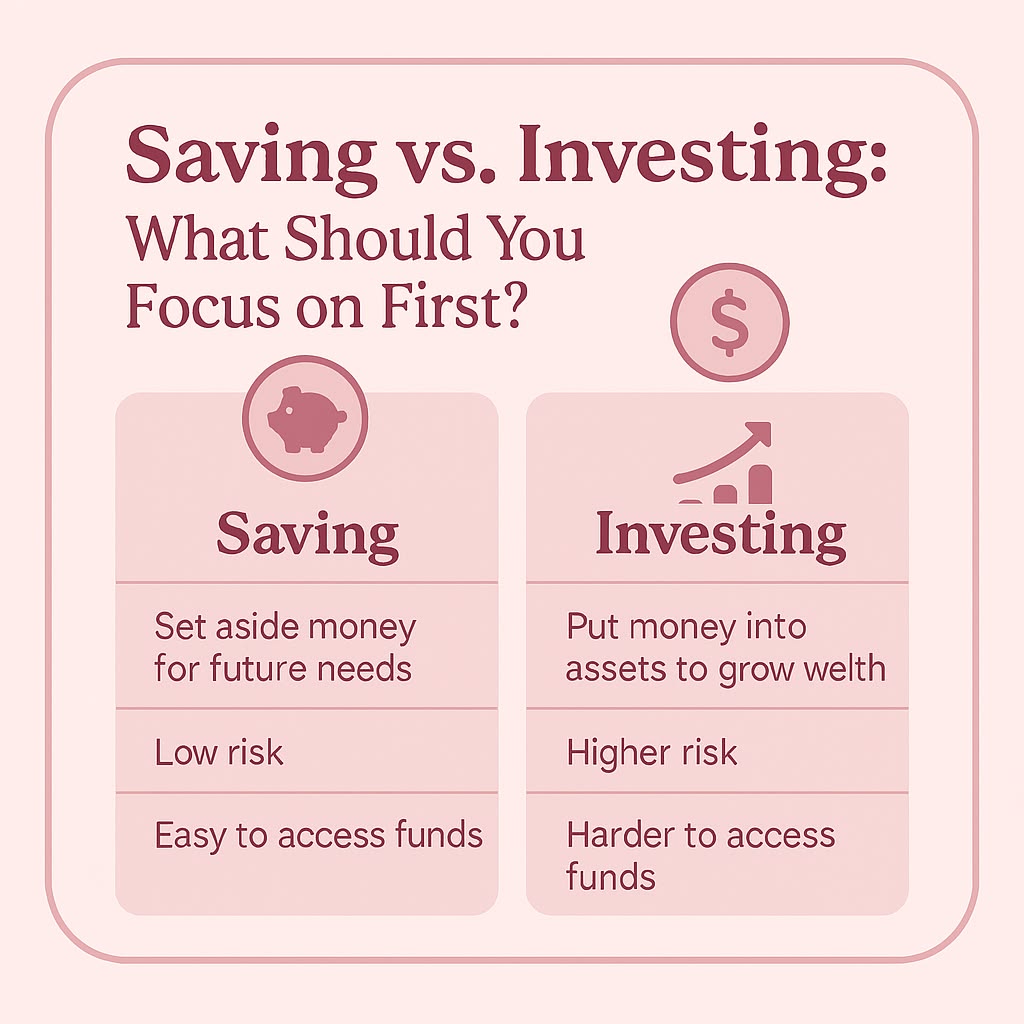
Managing money wisely involves making decisions that support both your present needs and your future goals. Two important parts of personal finance are saving and investing. Although these terms are often used together, they serve different purposes. Saving helps you keep money available for future expenses, while investing aims to grow your money over time.
For beginners, deciding whether to save or invest first can be confusing. You may want to grow your wealth, but you might also need money for emergencies, rent, food, or other responsibilities. Understanding the differences between saving and investing can help you choose the right approach for your financial situation.
1. What Is Saving?
Saving means setting aside money for future use instead of spending it immediately. People typically save for emergencies, school fees, rent, planned purchases, and other short-term financial goals.
For example, if you receive ₦100,000 monthly and set aside ₦10,000, you can gradually build savings to cover future expenses.
The main purpose of saving is to preserve money and keep it accessible when you need it. Depending on where you keep your money, you may earn some interest, but the primary goal is usually security and availability rather than substantial growth.
Common places to keep savings include bank savings accounts and suitable savings products offered by reputable financial institutions. Before choosing an account, consider its fees, withdrawal conditions, and applicable protections.
Saving is especially important when you have limited financial reserves or expect to need your money soon.
2. What Is Investing?
Investing means putting money into assets with the aim of earning returns or increasing its value over time. Common investment options include stocks, bonds, mutual funds, and certain regulated investment products.
For example, you might invest money in a diversified fund that holds shares in several companies. If the investments perform well, their value may increase, and you may earn returns. However, their value can also decline, and you could lose money.
Unlike ordinary savings, investments are not always immediately accessible at their current value. Some may fluctuate significantly with market conditions, while others may have withdrawal restrictions or additional costs.
Investing is generally more suitable for money you can leave untouched for several years, depending on the investment and your financial goals.
Before investing, make sure you understand the risks, fees, and potential returns. Avoid opportunities that promise guaranteed high profits without risk.
3. The Main Differences Between Saving and Investing
Saving and investing both play important roles in financial management, but they are designed for different purposes.
Saving focuses on safety and accessibility. It helps you prepare for near-term expenses and unexpected emergencies. Your money is generally easier to access, depending on the account or product you choose.
Investing focuses on potential long-term growth. It can help you build wealth and work toward goals such as retirement, buying property, or achieving long-term financial independence. However, returns are uncertain, and losses are possible.
Consider your time frame. If you need money for rent in three months, investing it in a volatile asset may expose you to unnecessary risk. If you are saving for retirement several decades away, investing may offer opportunities for long-term growth that ordinary savings alone may not provide.
The right choice depends on when you need the money, how much risk you can tolerate, and your current financial circumstances.
4. Why You Should Usually Save Before Investing
For many beginners, building savings should come before making substantial investments. This is because savings provide a financial foundation that helps you handle emergencies without selling investments at an inconvenient time.
Imagine that you invest most of your money in the stock market and then experience an unexpected medical expense. If the market has fallen, you may have to sell your investments at a loss to pay the bill.
Having emergency savings can reduce the likelihood of facing this situation.
Before committing significant money to investments, consider building an initial emergency reserve. Over time, aim to save enough to cover three to six months of essential expenses, adjusting the target according to your income stability and responsibilities.
You should also consider paying down expensive debt. High-interest borrowing can place considerable pressure on your finances and may cost more than you can reasonably expect to earn from investments.
However, saving first does not mean you must postpone investing until you have accumulated a large amount of money. Your approach can depend on your circumstances.
5. When Should You Start Investing?
Once you have some emergency savings, understand your essential expenses, and have a plan for managing expensive debt, you can begin considering investments.
The appropriate time depends on your goals and financial stability. If you have a reliable income, manageable expenses, and money you will not need for several years, you may be ready to start with a small amount.
For example, suppose you earn ₦150,000 monthly and can comfortably set aside ₦20,000 after covering your essential expenses. You might allocate part of that amount to emergency savings and, once you have an adequate reserve, direct some toward long-term investments.
You do not need to wait until you are wealthy to learn about investing. Start by understanding basic concepts such as risk, diversification, fees, and investment time horizons.
If you are investing in Nigeria, verify that financial institutions and investment providers are appropriately registered with the relevant regulators. Be cautious of fraudulent schemes and avoid committing money you need for immediate living expenses.
6. How to Balance Saving and Investing
Saving and investing do not have to compete with each other. In many situations, the most effective financial plan includes both.
Begin by identifying your financial goals and dividing them according to when you will need the money.
Short-term goals, such as rent, school fees, and emergency expenses, generally call for accessible savings. Long-term goals, such as retirement or building wealth over many years, may be suitable for carefully selected investments.
For instance, you might use a savings account for your emergency fund while contributing regularly to a diversified investment fund for a long-term goal.
Review your progress periodically. If your expenses increase, you may need to prioritize savings. If your emergency fund is adequate and your income becomes more stable, you may be able to increase your investment contributions.
Your plan should adapt to your changing needs rather than follow a fixed formula regardless of your circumstances.
7. Common Mistakes to Avoid
One common mistake is investing money needed for everyday expenses. This can leave you financially vulnerable if an emergency occurs or an investment loses value.
Another mistake is keeping all your long-term money in cash indefinitely without considering inflation. Over time, rising prices can reduce the purchasing power of money that earns little or no interest.
Some beginners also chase quick profits, borrow money to invest, or put all their funds into a single asset. These decisions can expose them to unnecessary risks.
Instead, establish clear financial goals, understand your risk tolerance, diversify where appropriate, and avoid investing based on pressure or promises of guaranteed returns.
Remember that neither saving nor investing guarantees financial success on its own. Both work best as part of a broader plan that includes budgeting, debt management, and consistent financial habits.
Conclusion
So, should you save or invest first? For most beginners, the sensible starting point is to build some emergency savings, cover essential expenses, and develop a plan for managing expensive debt before making substantial investments.
Saving protects your financial stability, while investing offers opportunities for long-term growth. Once you have a reasonable financial foundation, you can gradually use both strategies to achieve your goals.
You do not need a large income to begin. Start by saving an affordable amount, learn the basics of investing, and increase your contributions as your circumstances improve.
Ultimately, the best financial decision is not simply choosing between saving and investing. It is understanding when to use each one so that you can manage today’s responsibilities while preparing for tomorrow’s opportunities.