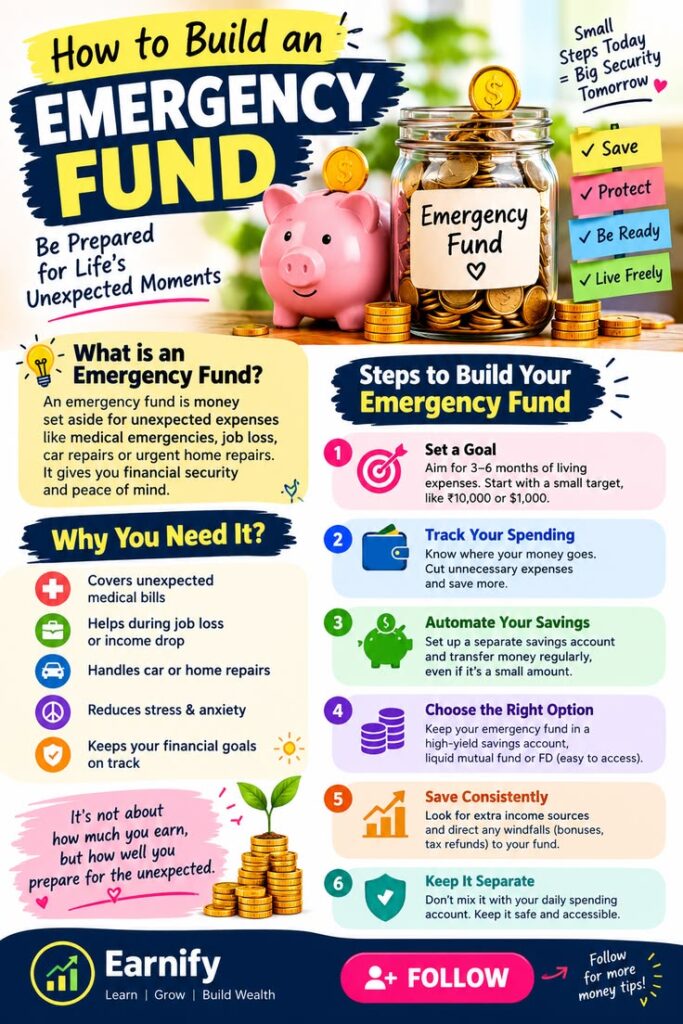
Life is full of unexpected situations. You might suddenly need money for medical expenses, urgent home repairs, transportation, or an unexpected loss of income. Without savings to handle these situations, you may be forced to borrow money, depend on others, or sacrifice essential needs. This is why having an emergency fund is an important part of managing your finances effectively.
An emergency fund is money set aside specifically for unexpected expenses or financial difficulties. It provides a safety net that helps you handle emergencies without disrupting your entire budget. Regardless of how much you earn, building an emergency fund can help you become more financially prepared and confident about the future.
1. What Is an Emergency Fund?
An emergency fund is a separate pool of money reserved for genuine financial emergencies. Unlike ordinary savings intended for planned purchases, such as a new phone, a holiday, or new furniture, emergency savings are meant to protect you when something unexpected happens.
For example, if your income suddenly stops or you need urgent medical treatment, an emergency fund can help you pay for these expenses without immediately borrowing money.
The amount you need depends on your income, responsibilities, and living expenses. Someone with a stable salary and few dependants may need a different amount from someone whose income changes regularly or who supports a family.
The important thing is to begin building your fund, even if you can only save a small amount at first.
2. Why Do You Need an Emergency Fund?
It protects you from unexpected expenses
Unexpected expenses can happen at any time. Your vehicle might break down, a household appliance might stop working, or you may suddenly need medical attention. These situations can be difficult to manage when your monthly income is already committed to essential expenses.
An emergency fund gives you money to handle these problems without completely disrupting your financial plans.
It reduces dependence on borrowing
Without emergency savings, you may need to take out a loan whenever an unexpected expense occurs. Depending on the loan’s terms, interest and fees can make the situation even more difficult.
Having money set aside can reduce the need to borrow and help you avoid accumulating expensive debt.
It provides financial peace of mind
Knowing that you have money available for emergencies can reduce financial anxiety. You may feel more prepared to handle unexpected situations because you do not have to depend entirely on your next payday.
Although an emergency fund cannot prevent every financial problem, it can make many problems easier to manage.
It protects your long-term financial goals
Suppose you are saving for education, starting a business, or planning to buy a home. An unexpected expense could force you to withdraw money from those savings.
An emergency fund helps protect your progress by providing a separate source of money for urgent needs.
3. How Much Should You Save?
A common recommendation is to build an emergency fund that covers three to six months of essential living expenses. However, this is a long-term target, not a requirement you must meet immediately.
Start by calculating how much you need each month for necessities such as food, housing, transportation, utilities, and healthcare.
For example, if your essential expenses total ₦60,000 monthly, your emergency fund targets might look like this:
- First milestone: ₦10,000.
- One month of essential expenses: ₦60,000.
- Three months of essential expenses: ₦180,000.
- Six months of essential expenses: ₦360,000.
These figures are examples. Your actual target should reflect your circumstances.
If you have dependants, irregular income, or limited job security, a larger fund may be useful. If your income is stable and you have other reliable support, you may choose to build your fund gradually toward a suitable target.
Do not feel discouraged if the full amount seems impossible. Every amount you save can help improve your financial security.
4. Start Small and Save Consistently
One of the biggest mistakes people make is waiting until they earn more money before they begin saving. Although a higher income can make saving easier, you can start developing the habit with a small amount.
For example, saving ₦1,000 each week would give you approximately ₦52,000 over a year if you save consistently and do not withdraw the money.
If that amount is too much for your current situation, choose a smaller target. You could save ₦200, ₦500, or another affordable amount whenever you receive income.
The goal is to build a sustainable habit rather than create pressure that makes you abandon saving altogether.
Whenever your income increases or you spend less than expected, consider directing part of the extra money into your emergency fund.
5. Include Emergency Savings in Your Budget
Budgeting makes it easier to build your emergency fund because it gives your savings a specific place in your financial plan.
Start by listing your income and essential expenses. Then determine how much you can reasonably set aside after covering necessary costs.
If you receive your salary monthly, you might transfer a small amount into your emergency savings account as soon as you are paid. If your income is irregular, you can save a percentage of the money you receive or contribute whenever business is good.
Avoid setting an unrealistic target that prevents you from paying for necessities. If your income barely covers your essential expenses, focus on those needs first and explore realistic ways to increase your earnings.
Consistency matters, but your plan must also be practical.
6. Keep Your Emergency Fund Safe and Accessible
An emergency fund should be easy to access when a genuine emergency occurs. It should also be kept somewhere reasonably secure.
You might use a separate savings account with a reputable financial institution. Before choosing an account or savings product, check its fees, withdrawal conditions, applicable protections, and how quickly you can access your money.
Avoid placing all your emergency savings in investments that can fluctuate significantly in value or require long withdrawal periods. Emergency money should not depend on favourable market conditions when you need it.
Keeping the fund separate from your everyday spending account can also help reduce the temptation to use it for non-essential purchases.
7. Know When to Use Your Emergency Fund
Your emergency fund should be reserved for unexpected expenses that are necessary and cannot reasonably wait.
Examples include urgent medical costs, essential repairs, or a sudden loss of income. A necessary emergency trip may also qualify, depending on the circumstances.
However, planned expenses such as birthdays, holidays, routine shopping, and annual bills should generally be covered by separate savings or your regular budget.
Before withdrawing money, ask yourself whether the expense is urgent, necessary, and unexpected. This simple test can help you protect your fund for situations when you genuinely need it.
If you use some of the money, make rebuilding the fund one of your financial priorities once the emergency has passed.
8. Build Your Fund Step by Step
The best way to build an emergency fund is to break the process into manageable stages.
First, choose a small initial target. Next, create a simple savings plan and track your progress each month. Once you reach your first milestone, increase your target gradually.
For example, you could aim to save ₦10,000 first, then ₦30,000, and eventually enough to cover one month of essential expenses. From there, work toward three to six months of expenses as your circumstances allow.
Review your target whenever your income, household responsibilities, or living costs change.
Do not compare your progress with other people’s savings. Your emergency fund should reflect your own financial situation and develop at a pace you can maintain.
Conclusion
An emergency fund is one of the most useful tools for protecting your finances. It helps you handle unexpected expenses, reduce dependence on borrowing, protect your long-term goals, and feel more prepared for financial uncertainty.
You do not need to build a large fund overnight. Start with an amount you can afford, include savings in your budget, keep the money accessible, and use it only for genuine emergencies.
Over time, consistent contributions can create a financial cushion that makes unexpected situations easier to manage. The most important step is not waiting for the perfect time to start. Begin with what you have and build your emergency fund gradually.