
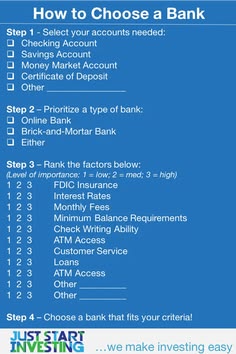
Choosing the right bank account is an important step toward managing your money wisely. Whether you want to save for the future, receive your salary, pay bills, or manage a business, the right account can make your financial life easier.
However, with so many banks and account types available, deciding which one best suits your needs can be challenging. The good news is that you do not need to be a financial expert to make the right choice. By understanding your financial goals, comparing account features, and checking the fees involved, you can find an account that works for you.
1. Understand Your Financial Needs
Before opening a bank account, think about why you need it. Different accounts are designed for different purposes, so understanding your needs will help you narrow down your options.
For example:
- Everyday spending: If you regularly receive money, transfer funds, pay bills, and make purchases, a current or savings account with easy access to your money may be suitable.
- Saving money: If your goal is to build an emergency fund or save for a major purchase, consider a savings account that offers competitive interest and encourages consistent saving.
- Business transactions: If you run a business, a business account may help you separate personal finances from business income and expenses.
- Receiving your salary: If you work for an employer, look for an account that supports convenient salary payments, transfers, and withdrawals.
Understanding your primary purpose makes it easier to identify the features that matter most.
2. Compare the Different Types of Bank Accounts
Not all bank accounts work the same way. Before making a decision, learn about the main options available.
Savings Account
A savings account is designed to help you keep money aside for future needs. Depending on the bank and account type, it may pay interest on your balance.
This type of account is suitable for people who want to save for emergencies, education, travel, or other financial goals.
Current Account
A current account is generally designed for frequent transactions. It may offer convenient transfers, payments, debit cards, and other everyday banking services.
It can be useful for people who regularly move money or need an account for business-related transactions. Fees and eligibility requirements vary by bank.
Business Account
A business account is intended for managing a company’s or business’s finances. It helps keep business revenue and expenses separate from personal spending, making financial records easier to organize.
Freelancers, entrepreneurs, and established businesses may benefit from this type of account, depending on their banking needs.
Fixed Deposit Account
A fixed deposit account allows you to deposit money for an agreed period, often in exchange for a specified interest rate. Early withdrawal may attract penalties or other restrictions.
It can be suitable for money you do not need to access immediately, but it is generally not the best place for your entire emergency fund.
3. Check the Fees and Charges
One of the most important factors to consider when choosing a bank account is the cost of maintaining it. Some accounts may have low fees, while others charge for specific services.
Before opening an account, find out whether the bank charges for:
- Monthly account maintenance.
- ATM withdrawals and card replacement.
- Bank transfers and electronic transactions.
- SMS alerts and account notifications.
- International transfers or foreign currency transactions.
Even small charges can add up over time. Compare the fee schedules of different banks and choose an account that offers the services you need at a reasonable cost.
If you are in Nigeria, you can consult the Central Bank of Nigeria for information about your rights as a bank customer and the requirement for transparent disclosure of banking charges.
Central Bank of Nigeria
+1
4. Compare Interest Rates
If you intend to save money, the interest rate is an important feature to examine. Interest is the amount a financial institution pays you for keeping eligible funds in an interest-bearing account.
For example, imagine you deposit ₦100,000 into a savings account offering 5% annual interest. If the rate remains unchanged for a year and interest is calculated simply on the original balance, you would earn ₦5,000 before applicable taxes or charges.
However, the actual amount you earn may depend on the account’s terms, how often interest is calculated, your balance, and any applicable fees.
When comparing interest rates, ask these questions:
- Is the interest rate fixed or variable?
- Is there a minimum balance requirement?
- How frequently is interest paid?
- Are there withdrawal restrictions?
- Are there conditions you must meet to earn the advertised rate?
Do not choose an account based on interest alone. An account with a higher rate may have restrictions that make it unsuitable for your everyday needs.
5. Consider Accessibility and Convenience
A good bank account should make it easy for you to access and manage your money when necessary.
Consider how conveniently you can use the account through different banking channels, including:
- Mobile banking applications.
- Internet banking.
- ATMs and cash withdrawal services.
- Bank branches and customer service centres.
- Local and international transfers, where available.
If you frequently make transactions using your phone, look for a bank with a reliable mobile application, a simple interface, and useful security features.
You should also consider whether the bank has branches or ATMs near your home, workplace, or school. This can be particularly important when you need cash or assistance with a transaction.
Convenience is not just about how quickly you can transfer money. It also includes how easily you can resolve problems when they occur.
6. Evaluate the Bank’s Security Features
Keeping your money safe should be a major priority when selecting a bank account. Although no financial institution can eliminate every risk, good security practices can reduce the likelihood of unauthorized access and fraud.
Look for banks that provide features such as:
- Two-factor authentication or other additional verification methods.
- Transaction notifications.
- The ability to freeze or block a debit card.
- Secure password and PIN management.
- Fraud monitoring and accessible reporting channels.
You should also take responsibility for protecting your account. Never share your PIN, password, or one-time password (OTP) with another person, even if they claim to represent your bank.
Avoid clicking suspicious links in messages that request your banking information. Always use your bank’s official application or website to access your account.
In Nigeria, verify that the financial institution is appropriately licensed and check its deposit-insurance status through the Nigeria Deposit Insurance Corporation (NDIC). Eligible deposits are protected up to the applicable insurance limits, subject to the scheme’s rules.
Central Bank of Nigeria
+2
7. Read the Account Requirements Carefully
Before opening an account, check the documents and conditions required by the bank.
Depending on the institution and account type, you may need:
- A valid means of identification.
- Your Bank Verification Number (BVN), where applicable.
- Your National Identification Number (NIN), where applicable.
- A valid phone number and email address.
- Proof of address or additional documents for certain accounts.
Some accounts have minimum opening deposits, minimum balance requirements, or restrictions based on age, residency, or account purpose.
If you are opening a business account, you may need additional business registration documents and information about the business.
Reviewing these requirements beforehand can help you avoid delays and select an account you are eligible to open.
8. Examine the Quality of Customer Service
Even a bank with excellent features can become frustrating if its customer support is poor.
Before choosing an account, consider how the bank handles complaints, transaction failures, card problems, and account restrictions.
You can assess customer service by:
- Reading recent customer reviews.
- Checking the availability of phone, email, and in-app support.
- Finding out how customers report failed transactions.
- Checking whether the bank provides clear complaint-resolution procedures.
Pay attention to repeated complaints about unresolved transfers, inaccessible accounts, unexplained charges, or poor communication.
Customer reviews can help you identify potential problems, although individual experiences do not always represent the bank’s overall service quality.
9. Think About Your Future Financial Goals
Your financial needs may change over time. An account that works well for you today may not offer everything you need in the future.
For instance, you might eventually want to save for a house, pay university expenses, start a business, or receive payments from international clients.
When comparing accounts, consider whether the bank offers other useful services, such as:
- Savings plans and goal-based accounts.
- Foreign currency accounts.
- Business banking services.
- Loans and credit facilities, subject to eligibility.
- Investment products, where available.
You do not need to use every service a bank offers. Instead, choose an account that meets your current needs while providing reasonable options for future growth.
10. Compare Different Banks Before Making a Decision
Avoid opening an account simply because your friends or family members use a particular bank. Their financial needs may be different from yours.
Create a simple comparison of at least three banks before deciding.
| Feature | Bank A | Bank B | Bank C |
|---|---|---|---|
| Account fees | Compare | Compare | Compare |
| Interest rate | Compare | Compare | Compare |
| Mobile app | Evaluate | Evaluate | Evaluate |
| ATM access | Check | Check | Check |
| Customer service | Review | Review | Review |
| Security features | Check | Check | Check |
Fill in the table using each bank’s current account terms, official fee schedule, and service information.
For Nigerian readers, you can also explore the Central Bank of Nigeria and the NDIC website to research financial institutions and deposit protection.
The best account is not necessarily the one with the most features. It is the one that provides the services you need at an acceptable cost, with suitable security and convenient access.
Common Mistakes to Avoid When Choosing a Bank Account
Choosing an account without adequate research can lead to unnecessary expenses and inconvenience. Here are some common mistakes to avoid.
Ignoring hidden or additional charges: Always review the bank’s fee schedule and ask about charges that are not immediately obvious.
Choosing an account because of popularity: A widely used bank may not necessarily offer the best account for your specific needs.
Overlooking mobile banking quality: If you rely heavily on digital transactions, an unreliable app can make everyday banking difficult.
Focusing only on interest rates: A high interest rate may come with withdrawal restrictions, minimum balance conditions, or other limitations.
Failing to check deposit protection: Confirm the institution’s licensing and applicable deposit-insurance coverage before depositing significant savings.
Ignoring account terms and conditions: Read the agreement carefully so you understand your responsibilities, withdrawal rules, and any applicable penalties.
Avoiding these mistakes will help you make a more informed financial decision.
Frequently Asked Questions (FAQs)
1. Which type of bank account is best for beginners?
A basic savings account may be a suitable starting point for someone who wants to save money, receive transfers, and learn how to manage personal finances. Compare fees, minimum balance requirements, and withdrawal conditions before opening one.
2. Is it better to have more than one bank account?
Having multiple accounts can be useful if you want to separate savings from everyday spending or keep personal and business finances apart. However, managing several accounts may involve additional fees and effort. Open only as many as you can manage effectively.
3. What should I consider when opening a bank account in Nigeria?
Consider the bank’s licensing, account fees, mobile banking services, customer support, interest rates, identification requirements, and NDIC deposit-insurance coverage. Ensure you understand the account terms before agreeing to them.
4. Can I open a bank account without visiting a branch?
Some banks and licensed financial institutions allow eligible customers to open accounts digitally. The process and available account features vary, and you may still need to complete identity verification or visit a branch for certain services.
5. What is the difference between a savings account and a current account?
A savings account is generally intended for saving money and may pay interest. A current account is generally designed for frequent transactions and payments. The exact features, charges, and eligibility requirements depend on the provider.
6. How can I tell whether a bank is trustworthy?
Check its regulatory licensing, deposit-insurance status, published account terms, security measures, complaint-handling procedures, and reputation. Be cautious of institutions that make unrealistic promises or cannot clearly explain how they operate.
Conclusion
Choosing the right bank account requires careful consideration of your financial needs, banking habits, and future goals. By comparing account types, fees, interest rates, accessibility, security, and customer service, you can make a decision that supports your financial well-being.
Remember that the best bank account is not necessarily the one with the highest interest rate or the most attractive advertisement. It is the one that allows you to manage your money safely, conveniently, and affordably.
Take time to research your options, read the account terms, and compare different institutions before opening an account. A thoughtful decision today can help you build better financial habits and manage your money more effectively in the future.