
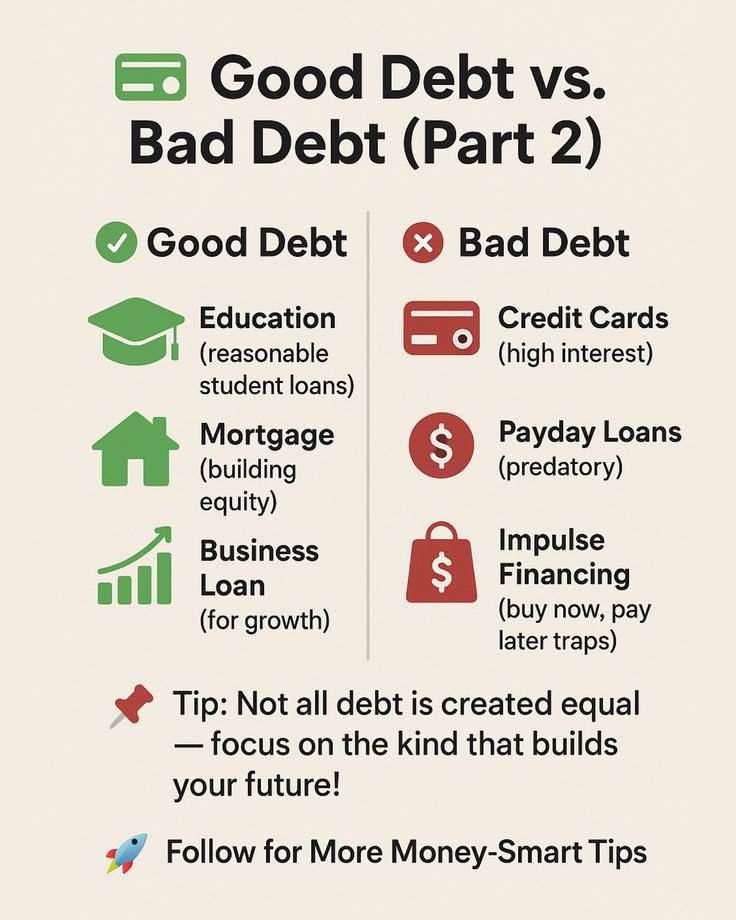
Debt is often viewed as something negative, but borrowing money is not always a bad financial decision. Sometimes, debt can help you achieve important goals, invest in your future, or manage a necessary expense. In other situations, borrowing can create financial stress, increase your expenses, and make it harder to build wealth.
The difference often comes down to why you borrow, how much you borrow, the interest you pay, and whether you can comfortably repay the money.
Understanding the difference between good debt and bad debt can help you make smarter financial decisions, avoid unnecessary financial pressure, and work toward long-term financial stability.
1. What Is Good Debt?
Good debt is generally borrowing that supports a worthwhile financial goal or helps you improve your future financial position. It may allow you to acquire an asset, develop valuable skills, or increase your earning potential.
However, good debt is not automatically beneficial. Even borrowing for a worthwhile purpose can become a problem if the repayments are unaffordable or the expected benefits do not materialize.
Student Loans and Education Financing
Education can improve your knowledge, qualifications, and employment opportunities. Borrowing to pay for education may therefore be worthwhile when the cost is reasonable and the qualification offers realistic benefits.
For example, someone may borrow to complete professional training that qualifies them for better-paying employment.
Before borrowing, consider tuition fees, living expenses, repayment terms, and the likely demand for your chosen qualification. Compare the total cost with more affordable alternatives, such as scholarships, grants, part-time study, or employer-sponsored training.
Education can be a valuable investment, but expensive borrowing does not guarantee a higher income.
Business Loans
A business loan may help an entrepreneur purchase equipment, increase inventory, hire employees, or expand operations.
For example, a small business owner might borrow money to purchase equipment that increases production capacity and helps meet customer demand.
The loan may be worthwhile if the business can generate enough additional profit to cover repayments and operating expenses.
However, business borrowing carries risks. Sales may decline, expenses may increase, or customers may pay late. Before taking a loan, prepare a realistic cash-flow forecast and consider whether the business could still manage repayments during a difficult period.
Mortgages and Property Loans
A mortgage allows people to purchase property without paying the entire purchase price upfront.
Depending on the location, property market, loan terms, and the buyer’s circumstances, owning a home may provide long-term housing stability and potentially build equity over time.
However, homeownership also involves expenses such as interest, maintenance, insurance, taxes, and other property-related charges.
A mortgage should not be considered good debt simply because it finances property. The purchase price, interest rate, repayment period, and affordability all matter.
Loans for Income-Producing Assets
Borrowing to acquire an asset that generates income may also be beneficial.
For example, a carefully planned loan could help a business acquire equipment used to provide paid services.
The key is to determine whether the asset’s expected income or financial benefits justify the borrowing costs.
Always account for maintenance, depreciation, operating expenses, and the possibility that the asset may generate less income than expected.
2. What Is Bad Debt?
Bad debt generally refers to borrowing that creates excessive financial pressure without providing sufficient long-term financial benefits.
It often involves high interest rates, unnecessary purchases, repeated borrowing to cover everyday expenses, or repayment obligations that exceed what a person can comfortably afford.
High-Interest Credit Card Debt
Credit cards can be useful payment tools when managed carefully. However, carrying an unpaid balance at a high interest rate can make purchases significantly more expensive.
For example, purchasing a new phone with a credit card and making only small payments over a long period may result in substantial interest charges.
If you repeatedly use credit cards for nonessential purchases without a clear repayment plan, your balance may grow faster than you expect.
Whenever possible, avoid spending more than you can repay and understand the interest rate, fees, and repayment terms associated with your card.
Payday Loans and Expensive Short-Term Borrowing
Short-term loans with high fees or interest rates can create serious financial difficulties.
These loans may appear convenient when you need money urgently, but their repayment costs can make your next payday more difficult to manage.
If you borrow to cover an expense and then need another loan to cover your regular bills, you may become trapped in a cycle of borrowing.
Before taking expensive short-term credit, consider negotiating a payment extension, requesting a manageable installment arrangement, or exploring lower-cost alternatives from reputable providers.
Borrowing for Lifestyle Purchases
Borrowing money to finance luxury clothing, expensive gadgets, holidays, or other nonessential purchases can create financial pressure when the repayments extend long after the excitement of the purchase has disappeared.
This does not mean you should never enjoy your money. Rather, it is important to distinguish between what you can afford and what you can only purchase by taking on debt.
Saving toward nonessential purchases may help you enjoy them without adding unnecessary financial obligations.
Repeated Borrowing to Cover Basic Expenses
Using loans to pay for food, rent, utilities, or other everyday necessities can be a sign that your current income is insufficient to cover your essential expenses.
Sometimes, borrowing is unavoidable during an emergency. However, repeatedly using debt to fill a monthly budget gap can make the problem worse.
If this situation continues, review your expenses, explore opportunities to increase income, and contact lenders about affordable repayment arrangements. Prioritize essential needs and avoid taking on additional expensive debt whenever possible.
3. The Main Differences Between Good Debt and Bad Debt
Although the distinction is not always straightforward, several factors can help you evaluate a borrowing decision.
Purpose: Good debt generally supports a worthwhile goal, while bad debt often finances unnecessary spending without a clear repayment plan.
Interest rate: Lower borrowing costs can make debt more manageable. High interest rates and fees can quickly increase the total amount you owe.
Affordability: A loan is more manageable when you can comfortably make payments after covering essential expenses.
Potential benefits: Borrowing may be worthwhile when the expected financial or practical benefits justify the cost and risk.
Repayment period: A long repayment term may reduce monthly payments but increase the total interest paid. A shorter term may cost less overall but require higher monthly payments.
Financial risk: Consider what would happen if your income decreased, an investment failed, or an unexpected expense arose.
Ultimately, the label matters less than whether the borrowing decision is sensible for your circumstances.
4. How to Decide Whether Taking on Debt Is Worth It
Before borrowing money, ask yourself a few important questions.
First, do I genuinely need this loan? Determine whether the expense is essential or whether you can delay it and save instead.
Second, what is the total cost? Look beyond the advertised interest rate and account for fees, insurance requirements, penalties, and the full repayment amount.
Third, can I afford the monthly payments? Review your income, essential expenses, existing debts, and emergency savings before committing.
Fourth, what happens if things do not go according to plan? Consider whether you could still make repayments if your income fell or the expected benefits failed to materialize.
Finally, are there better alternatives? Compare different lenders, negotiate payment terms, investigate grants or scholarships, or consider saving for the purchase.
Taking time to answer these questions can prevent a temporary decision from becoming a long-term financial burden.
5. What If You Already Have Bad Debt?
If you already owe money on expensive loans or credit cards, do not assume that your financial situation cannot improve.
Start by listing every debt, including its outstanding balance, interest rate, minimum payment, and due date.
Make required payments where possible, especially on obligations with serious consequences for nonpayment. Prioritize essential living costs and address overdue accounts that could put your housing, utilities, or other necessities at risk.
Next, choose a repayment strategy.
The debt avalanche method focuses additional payments on the debt with the highest interest rate, potentially reducing the total interest you pay.
The debt snowball method focuses on the smallest balance first, helping you achieve early victories that may improve motivation.
You can also contact your lenders to discuss revised payment arrangements if your current obligations are unaffordable. Be cautious of companies that promise guaranteed debt elimination for large upfront fees.
Most importantly, avoid adding unnecessary debt while you work toward repayment.
6. Build Healthy Borrowing Habits
Developing healthy financial habits can help you avoid unnecessary debt in the future.
Create a monthly budget, build an emergency fund gradually, and save toward major purchases whenever possible. Before applying for credit, compare interest rates and understand the repayment terms.
Avoid borrowing based solely on the maximum amount a lender is willing to offer. Just because you qualify for a loan does not mean you can comfortably afford it.
Review your finances regularly and make adjustments when your income, expenses, or responsibilities change.
If you decide to borrow, do so with a clear purpose, a realistic repayment plan, and an understanding of the risks.
Conclusion
Good debt and bad debt are not determined by the type of loan alone. They depend on the purpose of borrowing, the cost of credit, your ability to repay, and the potential benefits and risks.
Borrowing for education, business development, or property may support long-term goals when the costs are reasonable and the repayments are affordable. On the other hand, high-interest loans, unnecessary lifestyle purchases, and repeated borrowing to cover everyday expenses can create lasting financial difficulties.
The most important lesson is to borrow thoughtfully rather than impulsively.
Debt should support your financial goals, not control your life. By understanding borrowing costs, evaluating your options, and maintaining responsible financial habits, you can make better decisions and build a more secure financial future.