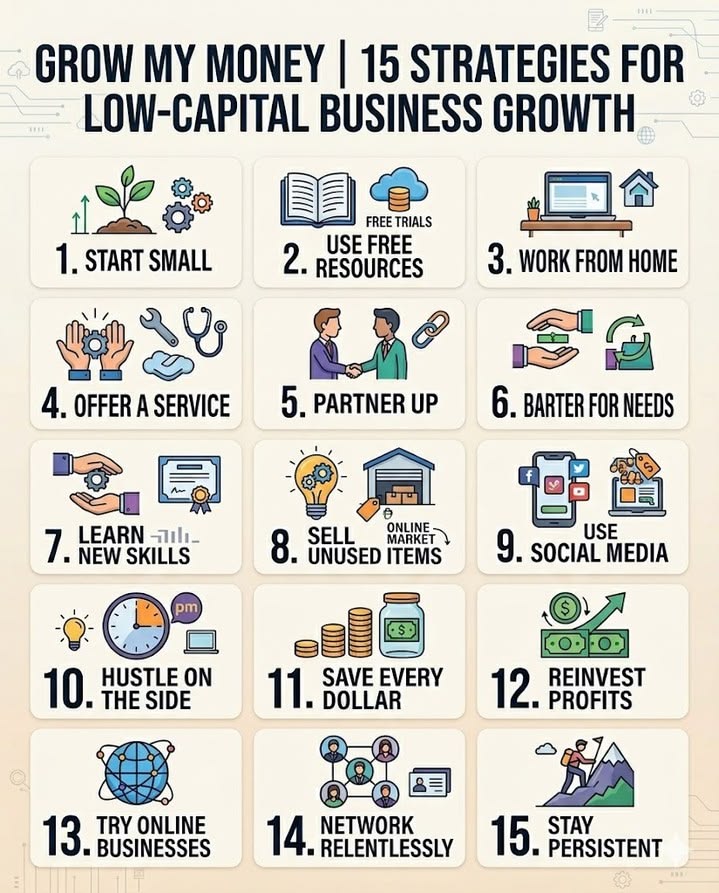
Starting a small business is one way to earn extra income, become financially independent, and work toward a better future. However, many people postpone their business dreams because they believe they need a large amount of money to get started. The truth is that some businesses can begin on a small scale and grow gradually as profits increase.
The key to starting a business with limited capital is choosing the right idea, understanding your customers, controlling expenses, and using your available resources wisely. You do not need an expensive office, a large shop, or many employees to begin. What you need is a practical plan and the willingness to learn.
Here are practical steps to help you start a small business with limited capital.
1. Choose a Business That Fits Your Budget
The first step is choosing a business you can realistically afford to start. Avoid selecting a business simply because it is popular or appears profitable. Consider your skills, interests, location, available resources, and the amount of money you can invest without affecting your essential needs.
Some businesses that may be started on a small budget include:
- Selling snacks, drinks, or household essentials.
- Preparing and selling homemade food.
- Selling clothes, accessories, or beauty products.
- Offering tutoring or freelance services.
- Hairdressing, tailoring, or other personal services.
- Providing laundry, cleaning, or delivery services.
- Selling products online through social media.
Service-based businesses can be particularly attractive because you may be able to begin with skills and equipment you already possess.
Before deciding, research local demand and competition. A simple business that solves a common problem may be more sustainable than an expensive idea that attracts few customers.
2. Start With a Problem People Are Willing to Pay to Solve
A successful business does more than sell products. It solves a problem or satisfies a need.
Think about the challenges people around you experience. Do workers need affordable lunch deliveries? Do busy families need laundry services? Are students looking for tutoring? Do customers want convenient access to everyday products?
Talk to potential customers and ask what they need, how they currently solve the problem, and what they would be willing to pay.
For example, if you want to sell snacks, find out which products people prefer, how much they can afford, and where purchasing them would be convenient.
Do not spend all your money based on assumptions. Test your idea with a small group of customers first. Their feedback can help you improve your offer before committing more capital.
3. Create a Simple Business Plan
You do not need a complicated business document to start a small business. A simple plan that explains what you want to sell, who your customers are, and how you will make money can be enough for your first steps.
Your plan should answer these questions:
- What product or service will I offer?
- Who is most likely to buy it?
- How much will it cost to start?
- What will my regular expenses be?
- How will I attract customers?
- How much must I sell to cover my costs?
- What will I do with the profit?
For example, if you plan to sell beauty products, estimate the cost of your initial stock, packaging, transportation, advertising, and delivery.
A simple plan helps you avoid unnecessary spending and gives you a clearer picture of whether your business idea is financially realistic.
4. Start Small and Expand Gradually
One of the biggest mistakes new entrepreneurs make is investing too much money before confirming that customers want their products.
Instead of renting an expensive shop immediately, you could begin from home, sell online, or operate from a small approved location where appropriate.
If you want to sell clothing, for example, you could start with a limited selection of popular items instead of buying large quantities in different sizes and styles.
You can also consider taking customer orders before purchasing certain products, provided you communicate delivery times honestly and can fulfil the orders reliably.
Starting small reduces your financial risk and allows you to learn what works. Once sales become more consistent, you can expand your inventory, improve your equipment, or move into a larger location.
Growth should follow evidence of customer demand rather than pressure to appear successful.
5. Manage Your Money Carefully
Good financial management is essential when starting with limited capital. You must understand how much money enters your business, how much leaves it, and how much remains after expenses.
Record every sale and business expense in a notebook, spreadsheet, or bookkeeping application. Include stock purchases, transportation, packaging, rent, advertising, and other operating costs.
Keep your business money separate from your personal money where practical. This makes it easier to understand your actual business performance.
For example, if you generate ₦100,000 in sales, that does not mean you have made ₦100,000 in profit. You must subtract the cost of the goods sold and other relevant expenses.
Avoid spending all your business income on personal needs. Keep enough money available to restock products, pay bills, and handle unexpected business expenses.
6. Promote Your Business Without Spending Too Much
You do not need an expensive advertising campaign to attract your first customers. Several low-cost methods can help people discover your business.
Start by telling friends, neighbours, colleagues, and potential customers what you offer. Ask satisfied customers to recommend your products or services to others.
You can also use WhatsApp, Facebook, Instagram, and other suitable platforms to display your products, share prices, answer questions, and receive orders.
Use clear photographs, accurate descriptions, and honest pricing. Respond promptly to enquiries and provide reliable customer service.
For example, a small food business could post its daily menu and ordering instructions on WhatsApp. A tailoring business could share photographs of completed work, with customers’ permission.
Focus on the marketing methods that generate actual enquiries and sales. Having many social media followers is less valuable than attracting customers who purchase and return.
7. Price Your Products to Make a Profit
Your prices must cover your costs while remaining reasonable for your target customers.
Calculate how much it costs to purchase or produce each product, including packaging, transportation, labour, and other relevant expenses. Then determine a selling price that leaves room for profit.
Suppose an item costs ₦3,000 to purchase and ₦500 for transportation and packaging. Your total cost is ₦3,500 before other overhead expenses. Selling it for ₦3,600 may leave too little profit to sustain the business.
Research competitor prices, but do not copy them blindly. Your costs and the value you offer may differ.
Review your prices when supplier costs change. A business can make many sales and still struggle if its prices are too low to cover expenses.
8. Reinvest Your Profits Wisely
When your business begins earning money, you may feel tempted to spend the profits immediately. However, reinvesting part of your earnings can help the business grow.
You could use some profits to purchase additional stock, improve packaging, acquire essential equipment, or promote products that sell well.
For example, if customers frequently request a particular product, using part of your profit to increase its availability may improve future sales.
However, do not reinvest every naira without considering your living expenses, taxes, debt obligations, and business cash needs.
Maintain a balance between paying yourself, covering operating expenses, building a business reserve, and reinvesting in growth.
9. Avoid Common Mistakes
Starting with limited capital requires careful decisions. Avoid these common mistakes:
- Spending too much on decorations, equipment, or rent before securing customers.
- Borrowing expensive money without a realistic repayment plan.
- Buying large quantities of products before testing demand.
- Mixing business money with personal spending.
- Ignoring customer feedback and complaints.
- Expecting immediate profits without allowing time to learn.
- Trusting schemes that promise guaranteed business success or quick wealth.
If you are operating in Nigeria, also investigate any applicable business registration, local permits, tax obligations, and industry-specific requirements. Choose the arrangements appropriate for your business and seek qualified advice when necessary.
Conclusion
Starting a small business with limited capital is possible when you choose a practical idea, understand your customers, and manage your money carefully. You do not need to begin with everything in place.
Start with a product or service people genuinely need, test your idea on a small scale, promote it using affordable methods, and keep accurate financial records. As you gain experience and attract regular customers, reinvest carefully and expand gradually.
Remember that a successful business is not necessarily the one that starts with the most money. It is one that understands its customers, controls its costs, provides value, and adapts to changing circumstances.
Start small, learn consistently, and let your business grow at a pace your finances can support.