Introduction
Diversification is an important concept in business, economics, agriculture, and investment. It refers to the process of spreading resources, investments, activities, or sources of income across different areas rather than depending on only one. The main purpose of diversification is to reduce risk, improve stability, create new opportunities, and increase the chances of achieving long-term success.
In simple terms, diversification means not putting all your eggs in one basket. When a person, business, or country depends on only one source of income or activity, it may experience serious difficulties if that source fails. However, when resources are spread across different areas, the negative effects of a problem in one area may be reduced by the performance of another.
For example, a business owner who sells only clothes may experience financial losses when demand for clothing decreases. However, if the business also sells shoes, bags, and accessories, the owner may continue to earn income from those products. This illustrates how diversification can help protect against uncertainty.
Meaning of Diversification
Diversification is the strategy of expanding or distributing investments, business activities, products, or income sources across different areas to reduce dependence on a single source. It involves making choices that help individuals, businesses, and governments manage risks while creating opportunities for growth.
Diversification can take different forms depending on the situation. In finance, it involves investing in different assets. In business, it involves offering different products or services. In agriculture, it means cultivating different crops or raising different types of livestock. In a country’s economy, it means developing several industries instead of relying heavily on one sector.
Although diversification can reduce risk, it does not guarantee success or eliminate every possible loss. Its effectiveness depends on how resources are distributed and whether the different activities are exposed to similar risks.
Why Diversification Matters
1. It Reduces Risk
One of the most important reasons diversification matters is that it helps reduce risk. Every investment, business, or economic activity faces uncertainty. Prices may fall, customers may change their preferences, natural disasters may occur, and unexpected economic problems may arise.
When all resources are invested in one activity, a problem in that activity can cause significant losses. Diversification spreads resources across different activities, reducing the potential impact of a problem in any one area.
For example, an investor who puts all their money into one company’s shares may lose a large portion of their investment if that company performs poorly. An investor who spreads their money across different companies and asset types may reduce their exposure to that single company’s failure.
2. It Creates Multiple Sources of Income
Diversification allows individuals and businesses to earn money from different sources. Depending on a single source of income can be risky, especially when that source becomes unreliable.
For instance, a person who depends entirely on a monthly salary may face financial difficulties after losing their job. However, someone who earns a salary and also operates a small business or receives rental income may have additional financial support.
Similarly, a business that offers several products can earn revenue from different customer groups. If sales of one product decline, sales of other products may help support the business.
3. It Promotes Business Growth
Diversification can help businesses expand into new markets and reach more customers. By introducing new products or services, a company can increase its sales opportunities and improve its competitive position.
For example, a bakery that initially sells bread may decide to produce cakes, pastries, and snacks. This allows it to serve customers with different needs and preferences.
Business diversification can also help companies enter new geographical markets, attract different customer groups, and identify profitable opportunities. However, businesses must carefully study market demand and costs before expanding.
4. It Improves Financial Stability
Diversification can contribute to greater financial stability by reducing dependence on a single investment, product, industry, or income source.
For example, a farmer who grows only maize may experience financial difficulties if maize prices fall. However, if the farmer also grows cassava and vegetables, income from those crops may help compensate for the lower maize earnings.
In the same way, an economy that depends heavily on one natural resource may struggle when global prices for that resource decline. Developing other industries can help make national income more stable.
5. It Encourages Innovation and New Opportunities
Diversification can encourage individuals and businesses to explore new ideas, technologies, markets, and methods of production.
When a company introduces new products, it may discover new customer needs and develop better ways of serving its market. This process can encourage creativity, improve efficiency, and strengthen competitiveness.
For example, a traditional shop may begin selling products online to reach customers beyond its immediate neighbourhood. This expands its market and creates another way to generate sales.
6. It Supports Economic Development
Diversification is important for the development of a country’s economy. Countries that depend on only one major export or industry can become vulnerable to changes in international prices and demand.
For example, an economy that relies heavily on crude oil may experience reduced government revenue when global oil prices fall. Developing agriculture, manufacturing, tourism, technology, and other industries can provide alternative sources of income and employment.
Economic diversification can also encourage entrepreneurship, attract investment, improve productivity, and create more job opportunities. Over time, these developments may contribute to higher living standards and a more resilient economy.
7. It Helps Businesses Survive Difficult Periods
Markets and economic conditions change over time. Businesses may face inflation, competition, supply shortages, changes in customer behaviour, or unexpected emergencies.
A diversified business may be better positioned to survive these challenges because it does not rely entirely on one product or market.
For example, a restaurant that offers dine-in meals, takeaway services, and food delivery may continue serving customers even when demand for one service decreases.
Nevertheless, diversification must be properly managed. Expanding into unfamiliar activities without sufficient knowledge or resources can create additional problems.
Types of Diversification
There are several major types of diversification.
Investment diversification: This involves spreading money across different investments, such as shares, bonds, and real estate, to reduce dependence on one asset.
Business diversification: This occurs when a company introduces new products, services, or business activities.
Income diversification: This means developing multiple sources of income, such as employment, a side business, or rental earnings.
Agricultural diversification: This involves growing different crops or raising different animals to reduce dependence on a single agricultural product.
Economic diversification: This occurs when a country develops different industries to reduce reliance on one sector.
Challenges of Diversification
Despite its benefits, diversification also has disadvantages. It may require additional capital, time, skills, and management. Businesses that expand too quickly may lose focus on their main activities or spend money on ventures they do not understand.
Furthermore, diversification does not always reduce risk if the different investments or activities are affected by the same economic conditions. Therefore, careful planning, research, and monitoring are necessary.
Conclusion
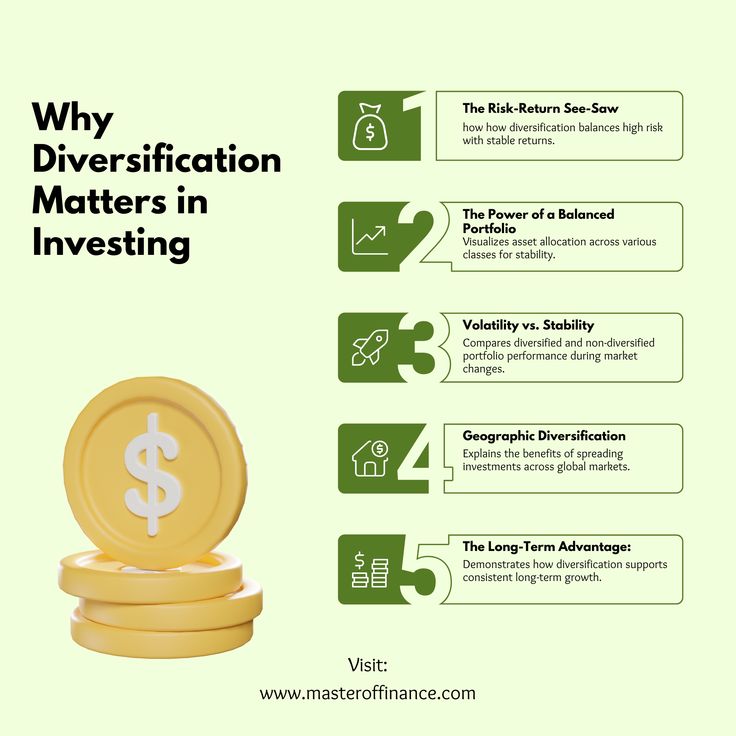
In conclusion, diversification is the practice of spreading investments, resources, business activities, or income sources across different areas. It matters because it helps reduce risk, create multiple income streams, improve financial stability, encourage innovation, support business growth, and promote economic development.
Individuals can use diversification to strengthen their financial security, businesses can use it to reach new markets, farmers can use it to protect their harvests, and governments can use it to build stronger economies.
Although diversification cannot eliminate all risks, it can reduce dependence on a single source and improve the ability to respond to unexpected challenges. When carefully planned and properly managed, diversification is an effective strategy for achieving stability, resilience, and long-term growth.